The cocktail shaker is the most iconic tool behind the bar. It does three jobs at once: it mixes ingredients that do not blend on their own (a citrus juice, a syrup, a spirit), it chills the cocktail in a few seconds and it adds just the right amount of meltwater, which softens the alcohol and opens up the aromas. Well chosen and well used, it makes the difference between a lukewarm mix and a crisp, cold, airy cocktail.
This guide brings together the essentials: the main families of shakers, the right capacity for the way you mix, materials, technique, straining and care. Each part links to a detailed article in our series dedicated to the shaker.
The three main families of shakers
There are three types of shaker, which differ in the number of pieces, the way they close and whether or not they have a built-in strainer. Our comparison Boston or Cobbler: which shaker should a beginner choose? sets out their strengths and limits.
The Boston, the bar shaker
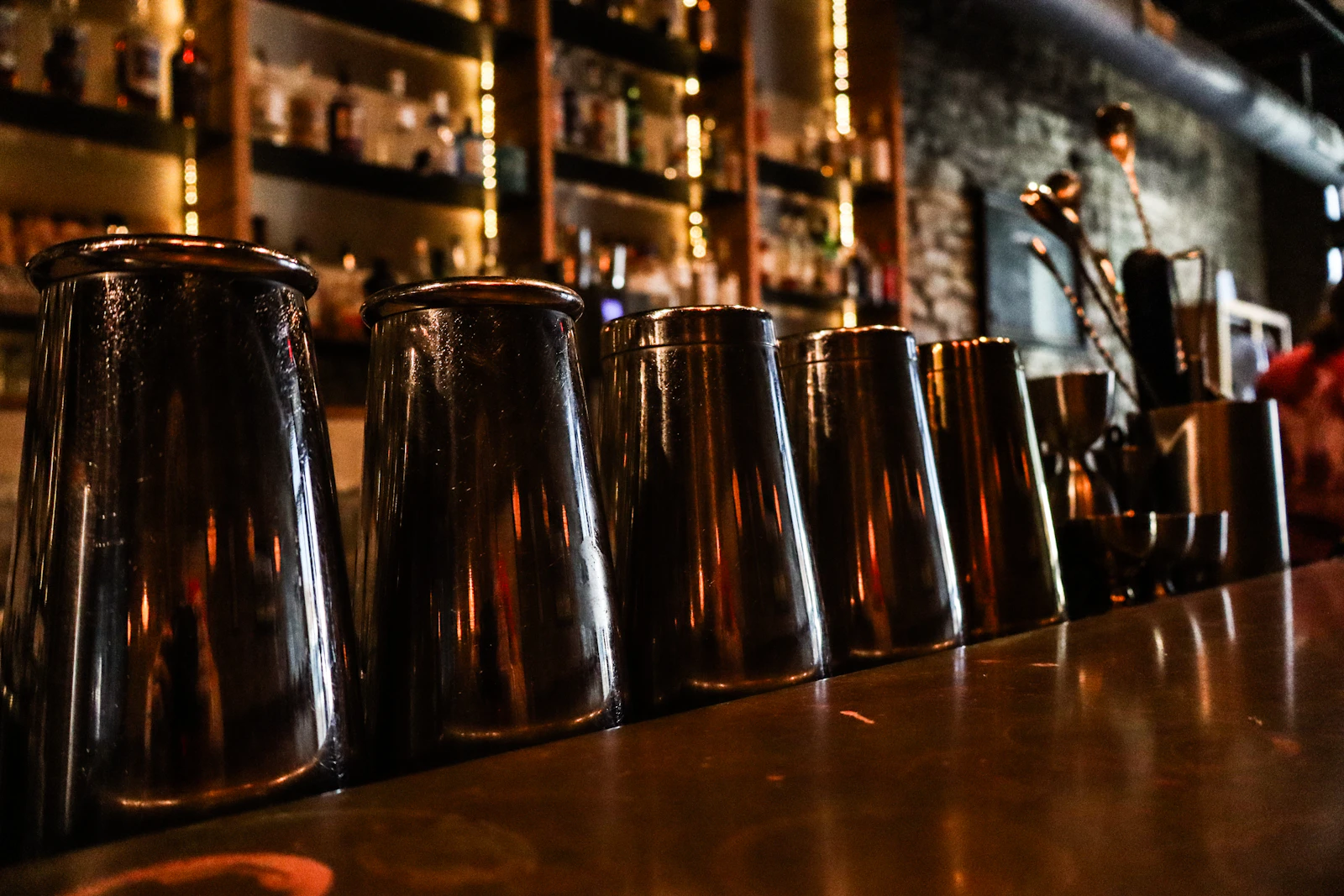
The Boston shaker is made of two tins that fit one inside the other, or of a tin and a glass. It offers the largest capacity, seals with a firm push, opens with a tap on the side and rinses in an instant: it is the choice of bartenders, who make one cocktail after another. It takes a little practice and is always used with a strainer. Our selection of Boston shakers ranges from polished stainless steel to fully engraved tins, such as the copper engraved Boston shaker of 650 and 850 ml.
The Cobbler, the all-in-one
The Cobbler, or three-piece shaker, combines a tin, a lid fitted with a strainer and a small cap that often doubles as a measure. No extra accessory is needed: you shake, take off the cap and pour. It is the easiest shaker to start with at home. A 550 ml stainless steel cobbler shaker is enough to make two or three cocktails at a time.
The Parisian, in between
The Parisian, or French shaker, follows the principle of the Boston with two metal pieces, but with a curved body and a very tight seal. Elegant, it too is used with a strainer. It is still rarer in bars than the Boston, whose logic it shares.
Which capacity should you choose?
Capacity determines how many cocktails you can make at once, but also the room left for ice: a shaker should be filled two thirds with ice to chill properly. In practice:
- 250 to 350 ml: one cocktail at a time, ideal for practising and measuring precisely, like the 350 ml cobbler shaker;
- 550 to 750 ml: two or three cocktails, the versatile size for the home bar;
- Boston (around 600 + 800 ml): the large capacity of bars, to make cocktails back to back or serve a whole table.
If you are unsure, go for a medium size: it suits almost every recipe and leaves enough room for the ice.
304 stainless steel, 201 stainless steel, finishes: reading the material
Almost all shakers are made of stainless steel, a metal that conducts cold very well and does not hold on to smells. 304 stainless steel, also called 18/8, best resists corrosion and the acids of citrus fruit: it is the reference for regular use. 201 stainless steel, more affordable, is perfectly fine for home use as long as you dry the shaker well after each wash.
Gold, copper, black or rose gold finishes are coatings applied to the stainless steel: they bring character to the bar but need gentle washing, without an abrasive sponge. Engraved models, such as the engraved Boston set with the Ay Tsao pattern, are cleaned the same way.
The technique: shaking a cocktail well
Technique matters as much as equipment. The main steps are always the same, whatever the shaker:
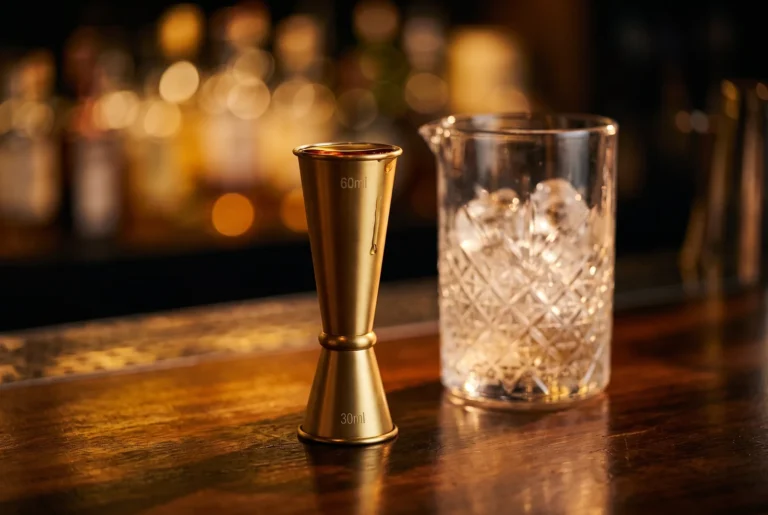
- Measure the ingredients into the smaller piece (or into the Cobbler tin) with a 30/60 ml jigger: precision is what keeps the recipe balanced.
- Add the ice last, two thirds of the way up, so that it does not melt before you shake.
- Close firmly, then hold the shaker with both hands, one hand on each piece, the larger one towards you.
- Shake hard, in a wide back-and-forth movement, for 10 to 15 seconds: the metal should become frosted.
- Open, strain and serve immediately.
The time varies with the ice, the recipe and the texture you want. For cocktails with egg white, such as the Whisky Sour, you first shake without ice to build the foam, then with ice to chill: this is the dry shake.
Bartenders also distinguish several ways of shaking. The hard shake, popularised in Japan, bounces the ice in a three-part movement to aerate the cocktail further. The whip shake, on the other hand, uses a small handful of crushed ice for just a few seconds, to chill a cocktail that will be served over crushed ice without diluting it too much. At home, a wide, steady movement is more than enough: the key is to shake hard, for long enough, with very cold, dry ice.
The bartender’s tip
A shaker that sticks when you try to open it is almost always a shaker that was well sealed and is very cold: the metal has contracted. Give a firm tap with the flat of your hand at the join between the two pieces, where they do not touch, rather than forcing it by pulling.
Straining: the strainer, an essential partner
The Boston and the Parisian have no built-in strainer. They are paired with a spring Hawthorne strainer, which sits on the tin and holds back ice and pieces of fruit. For a perfectly smooth cocktail, add a fine strainer under the Hawthorne: this is double straining, essential for recipes with fresh fruit, herbs or crushed ice. Find all the models in our cocktail strainers section.
A shaker on its own or a complete kit?
If you are starting from scratch, a kit brings together the shaker and its companions in one go: jigger, strainer, bar spoon and muddler. The 4-piece Boston shaker set with muddler already covers shaken and muddled cocktails, such as the Mojito or the Caipirinha. For a more complete bar, our cocktail kits go up to twenty or so pieces arranged on their stand. If you already have one tin, a 475 ml stainless steel shaker tin completes a Boston at a lower cost.
Looking after your shaker
Rinse the shaker in warm water straight after use: sugars and citrus acids must not dry on the metal. Then wash it with mild washing-up liquid and dry it at once with a soft cloth, especially if it is made of 201 stainless steel, coated in a colour or engraved. Avoid abrasive sponges and store the pieces apart, so that air can circulate and the Cobbler’s seals are not damaged.
Frequently asked questions
Which shaker should I choose to start with?
The Cobbler is the simplest: it needs no accessory. If you want to progress quickly and make several cocktails at once, the Boston paired with a Hawthorne strainer remains the best investment.
How long should you shake a cocktail?
Allow 10 to 15 seconds with standard ice cubes: the metal should be frosted. With lots of small ice cubes, shake a little less so as not to over-dilute.
Can a shaker go in the dishwasher?
We recommend washing by hand, especially for coloured, engraved or 201 stainless steel models: it keeps the metal shiny and the pieces sealing well.
Do you need a strainer with a Boston shaker?
Yes. The Boston has no built-in strainer: a Hawthorne strainer holds back the ice when serving, and a fine strainer completes the straining if needed.
The articles in this guide

Boston or Cobbler: which shaker should a beginner choose?
Capacity, handling, built-in strainer or not: what sets the Boston, the Cobbler and the Parisian apart, and how to choose for the way you mix.

Please drink responsibly. Alcohol abuse is dangerous for your health.