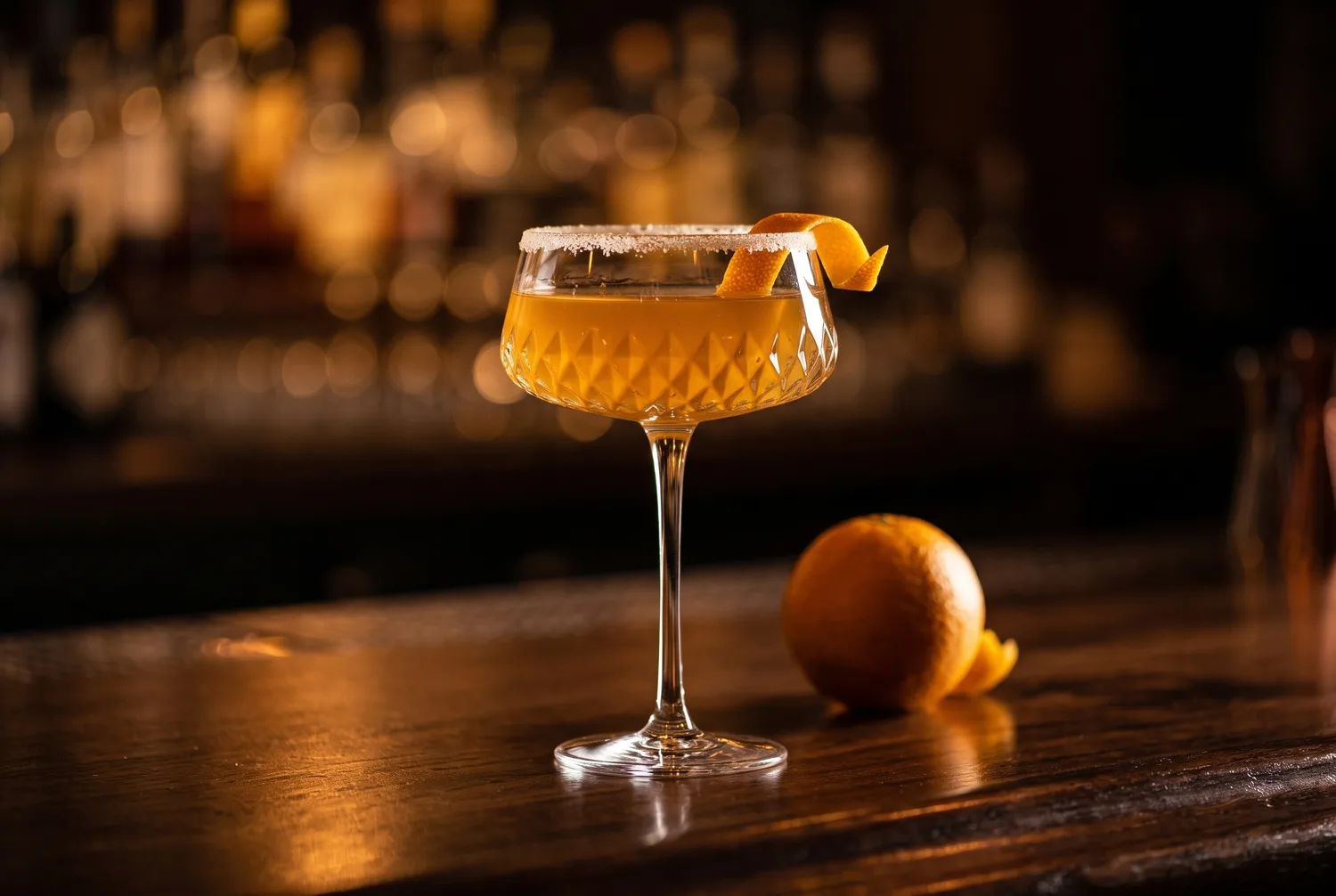
The Sidecar is one of the great classics of the sour family: a spirit, an orange liqueur and lemon juice, shaken together. Cognac gives it a fruity, woody roundness, the orange a fragrant sweetness and the lemon the freshness that balances it all. This Sidecar recipe uses the most common proportions, served in a chilled coupe. The cocktail appears in bar books in the early 1920s, notably in London and Paris; several establishments claim to have created it, and its exact origin remains uncertain. It is a short drink, best as an aperitif or late in the evening, and particularly enjoyable in autumn.
The ingredients
- 50 ml cognac
- 20 ml orange liqueur (triple sec)
- 20 ml fresh lemon juice
- Very cold, dry ice cubes
- Optional: caster sugar for the rim, orange twist
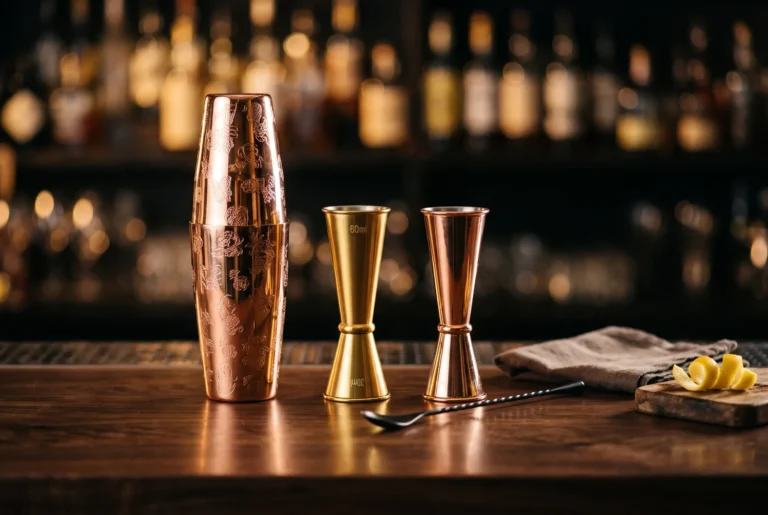
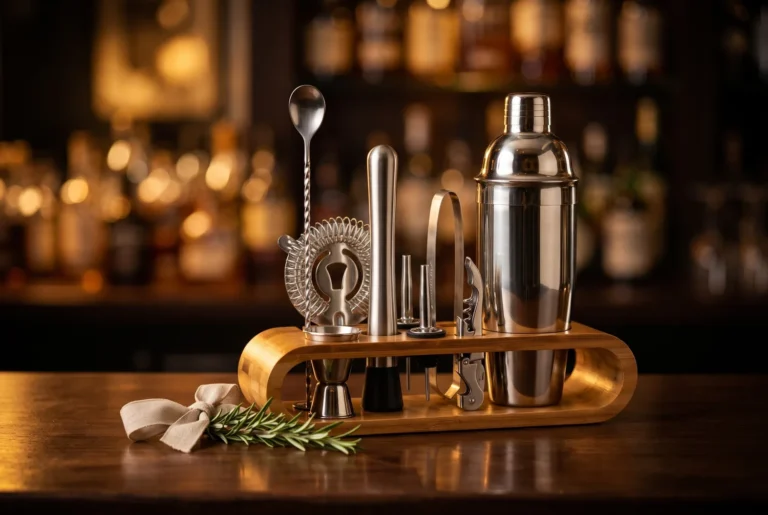
The tools
The method
- Put the coupe in the freezer for about ten minutes, or fill it with ice and water while you prepare the drink.
- If you want a sugared rim, run a lemon wedge around half the rim of the empty, dry coupe, then dip it in caster sugar. Sugaring only half the rim lets you choose with each sip.
- Squeeze the lemon and measure the juice with the jigger, then the triple sec and the cognac, into the small tin of the shaker.
- Add ice, close and shake hard for 10 to 15 seconds, until the tin is frosted.
- Strain through the Hawthorne strainer into the chilled coupe.
- If you like, express an orange twist over the glass to scent the surface.
The Sidecar is shaken like every sour: our guide how to use a Boston shaker covers sealing, timing and straining. For the coupe, see our guide which glass for which cocktail and the cocktail glasses section.
The bartender’s tip
The balance depends a great deal on the cognac and the orange liqueur. A young VS-style cognac brings fruit and liveliness; an older cognac gives a rounder, woodier drink. Proportions vary from one bar to another: some prefer more equal parts, others increase the cognac. Start with the measures in this recipe, then adjust the lemon or orange liqueur by 5 ml depending on whether you like your Sidecar drier or sweeter. Always squeeze the lemon at the last minute: yesterday’s juice loses its freshness.
Variations
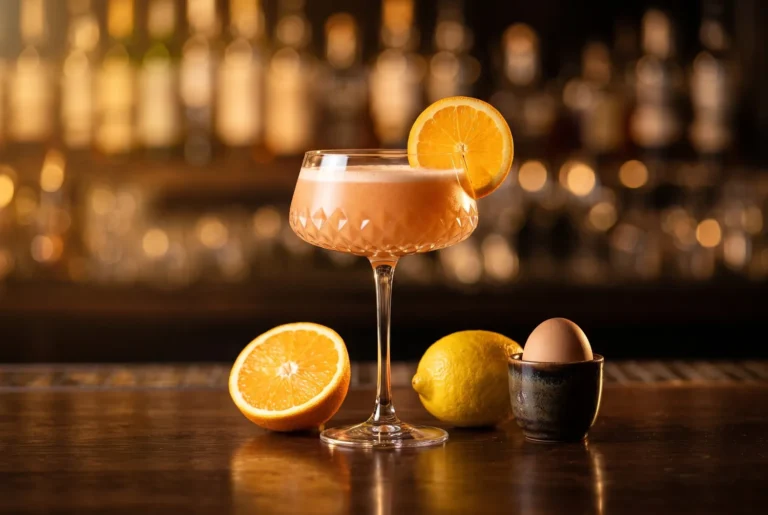
The Sidecar belongs to the same family as the Margarita, where tequila and lime replace the cognac and lemon. With rum, you get a variation close to an orange-scented Daiquiri; with gin, a cocktail known as the White Lady, often finished with an egg white. For an alcohol-free version, shake 50 ml of cold-brewed black tea, 30 ml of orange juice, 20 ml of lemon juice and 10 ml of sugar syrup over ice, then serve in the sugar-rimmed coupe.
Please drink responsibly. Alcohol abuse is dangerous for your health.