Choosing a cocktail glass is not just a question of looks. The shape of the glass determines the temperature of the drink, the room left for ice, the way the aromas rise to the nose and even how it feels in the hand. A Dry Martini served in a tall glass would warm up too quickly; a Mojito in a coupe would have no room for its crushed ice and mint leaves. This guide presents the main families of glasses, the logic that pairs each with a type of cocktail, and the articles that explore each shape in more depth.
The basic rule: ice or no ice
Before talking about shapes, one simple question sorts most recipes: is the cocktail served with or without ice in the glass?
- Without ice (served “up”): the cocktail is chilled in the shaker or mixing glass, then strained into a chilled stemmed glass. The stem stops your hand from warming the drink. This is the territory of the coupe and the Martini glass.
- On the rocks: the cocktail is served over one or more ice cubes that keep it cold. A short, heavy glass is used, or a tall glass if the recipe is lengthened with sparkling water or a mixer.
- Over crushed ice: tropical cocktails and some muddled classics are served over a mound of crushed ice, in a large glass or a mug that holds the cold.
This distinction already explains half of the choices. The rest depends on the volume of the recipe, its presentation and the tradition attached to each cocktail.
Stemmed glasses: the coupe and the Martini glass
The coupe
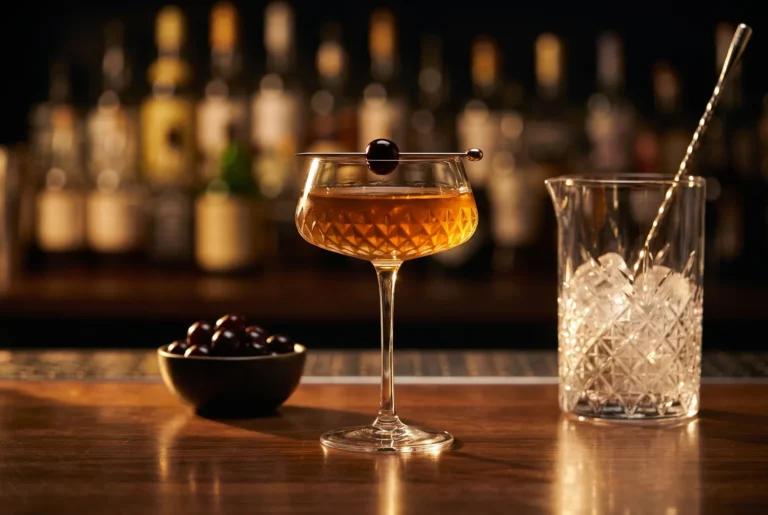
Wide and shallow, set on a stem, the coupe is the glass for short cocktails served without ice: Daiquiri, Manhattan, Pisco Sour, Cosmopolitan. Its rounded shape holds the liquid well when you walk or raise a glass, which makes it more practical day to day than the Martini glass. It also shows off the foam of egg white cocktails. An engraved 300 ml cocktail coupe easily holds most short recipes, garnish included.
The Martini glass
With its conical, flared bowl, the Martini glass has become the very image of the cocktail. Its wide opening releases the aromas of dry, aromatic drinks such as the Dry Martini. Its shape is less stable, however, and the liquid spills easily. Choose a modest capacity, because a short cocktail served in a very large glass warms up before it is finished. The differences between these two glasses will be the subject of a dedicated article in this guide.
In both cases, chill the glass before serving: a few minutes in the freezer, or ice and water poured in while you prepare the drink and tipped out at the last moment.
Short glasses, tall glasses and mugs
The Old Fashioned glass
Short, thick and heavy-based, the Old Fashioned glass (or tumbler) holds cocktails served on the rocks: Old Fashioned, Negroni, Caipirinha. Its wide opening lets you slip in a large ice cube and work directly in the glass when a recipe calls for the muddler. The same glass is used for sipping whisky. The light 280 ml whisky glasses suit both uses.
The highball glass
Tall and straight, the highball takes long drinks: a spirit topped with sparkling water, a mixer or juice, served over plenty of ice. The Mojito is a good example. Its height keeps the bubbles longer and leaves room for a straw. The light 360 ml tall glasses suit most long drinks.
The bartender’s tip
To begin with, four shapes are enough: two coupes, two short glasses, two tall glasses and, if you like very dry stirred cocktails, two Martini glasses. With these you can serve the great majority of classics properly. Then add the specialist mugs according to the recipes you make most often.
The tiki mug
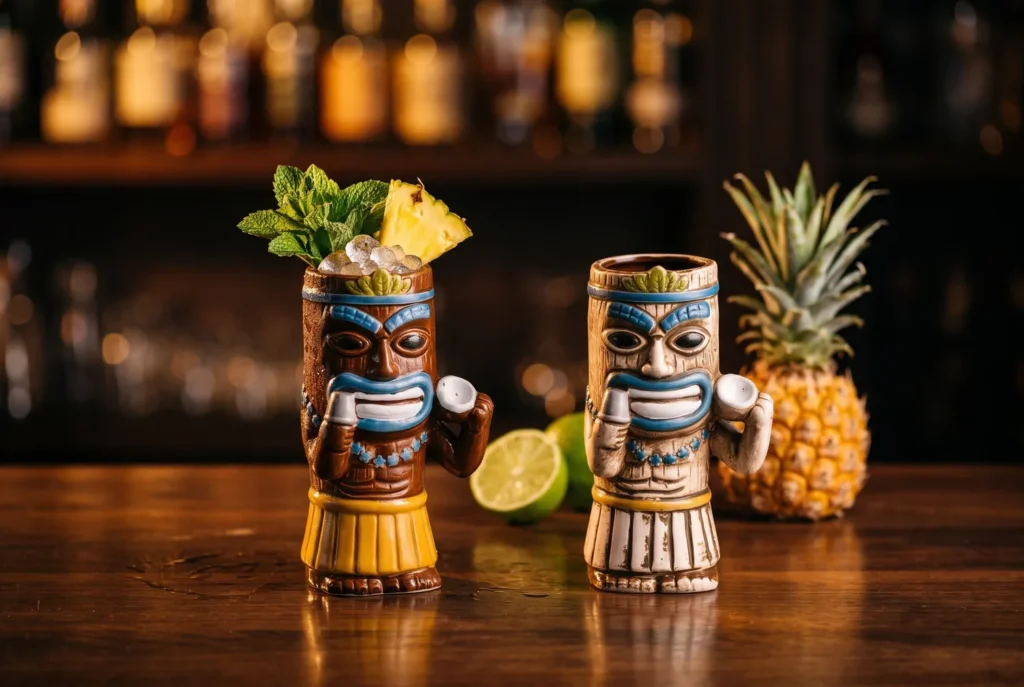
Ceramic tiki mugs were born with the fashion for Polynesian-themed American bars in the mid-twentieth century. They hold rum-based tropical cocktails served over crushed ice and generously garnished: Mai Tai, Zombie. Their thickness keeps the cold in and their sculpted decoration is part of the pleasure of serving. The 440 ml conch shell tiki mugs and the spear warrior tiki mugs have the right capacity for these generous recipes.
The copper mug
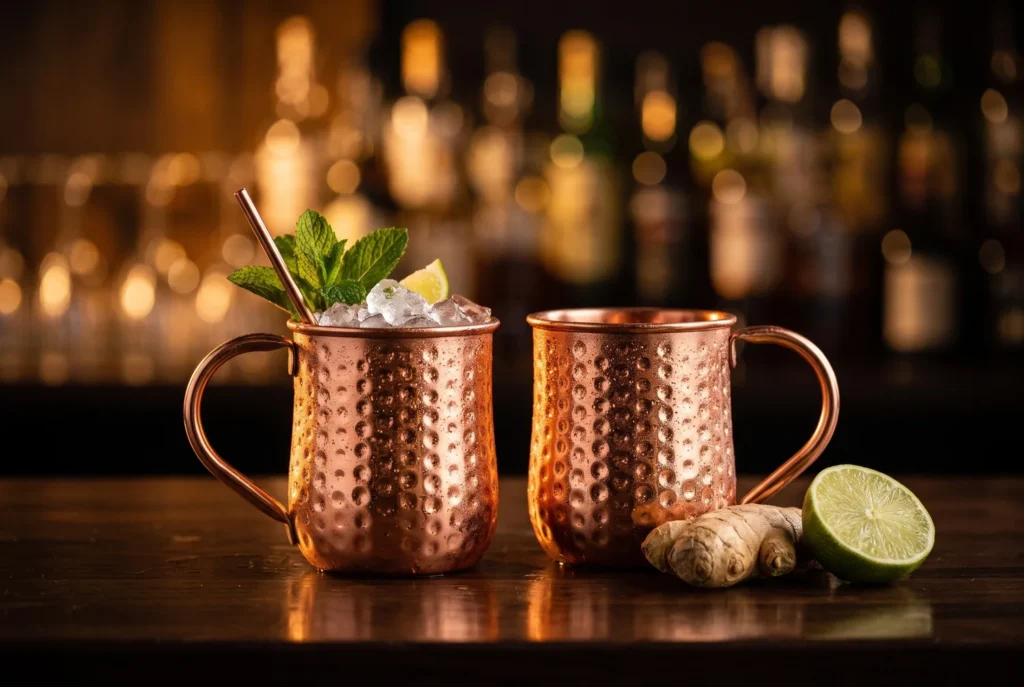
The copper mug is inseparable from the Moscow Mule, served over ice with ginger beer and lime. The metal cools very quickly in contact with ice, giving a sensation of freshness from the first sip. The hammered copper Moscow Mule mug with its straw and the set of 4 hammered copper mugs are designed for this purpose. An article in this guide will explain why copper is associated with this cocktail and how to care for it.
You will find all our glasses and mugs in the cocktail glasses section.
Using your glasses well
A few simple habits improve service, whatever the glass:
- Chill the glass before serving a cocktail without ice, and empty it just before straining.
- Match the capacity to the recipe: a 90 to 100 ml cocktail looks lost in a half-filled 300 ml glass and warms up faster.
- Hold the glass by the stem for coupes and Martini glasses, so as not to warm the drink.
- Wash by hand fine and engraved glasses in hot soapy water, then dry them with a lint-free cloth to avoid marks.
- Store glasses upright rather than upside down on a shelf, to protect the rim, their most fragile part.
To organise your glasses alongside the rest of your equipment, our guide to setting up a home bar tells you what to gather first, and our guide to stirred cocktails explains how to serve recipes in a coupe without ice.
The topics in this guide
Several articles will explore each family of glasses in depth. The first will look at the Moscow Mule mug: its history, how copper conducts cold, and the difference between solid and plated copper. A second will tell the story of tiki mugs, from the first Polynesian bars to the cocktails they hold.
A third article will compare the coupe and the Martini glass, their shapes, their history and the cocktails suited to each. A fourth will help you choose your whisky glasses, for sipping as well as for cocktails. Finally, one last article will explain how to care for a copper mug to keep it shining. These articles will appear in the list below as they are published.
Frequently asked questions
Which cocktail glass should I buy first?
A pair of coupes and a pair of short glasses cover most classics: the former for cocktails served without ice, the latter for those served over a cube.
What is the difference between a coupe and a Martini glass?
The coupe is rounded and shallow, more stable and less prone to spills; the Martini glass is conical and flared. Both hold short cocktails served without ice.
Why serve a Moscow Mule in a copper mug?
It is its traditional presentation: copper cools very quickly in contact with ice, which heightens the sense of freshness.
Should I chill the glass before serving?
Yes for cocktails served without ice: a cold glass keeps the drink at the right temperature for longer. A few minutes in the freezer or a little ice and water is enough.
The articles in this guide

Coupe or Martini glass: what is the difference, and which should you choose?
Rounded coupe or conical Martini glass: shape, history, the cocktails that suit each one and how they feel in the hand, to help you pick the…
The tiki mug: its history, the cocktails to serve in it and how to choose one
Where the tiki mug comes from, from Don the Beachcomber to Trader Vic, which cocktails to serve in it, what capacity to choose and how to…
Moscow Mule mug: why copper, and how to choose yours
The history of the copper mug, what the metal really changes when serving, solid copper, plated or lined, food safety and care: everything to know before…

Please drink responsibly. Alcohol abuse is dangerous for your health.