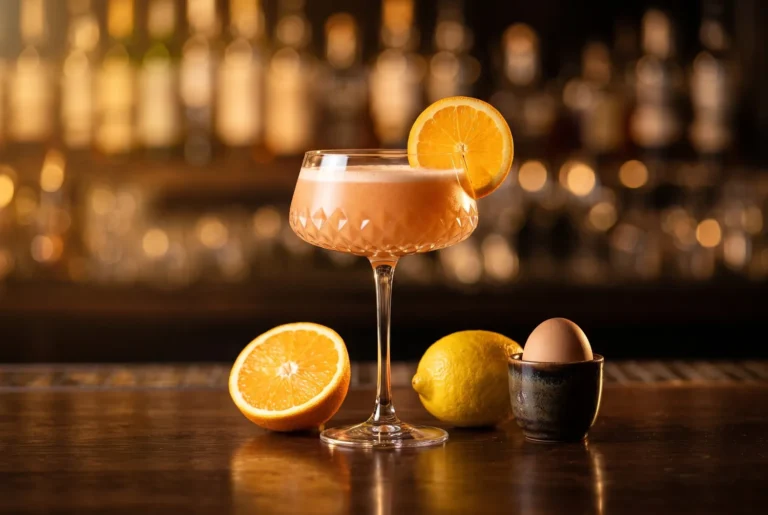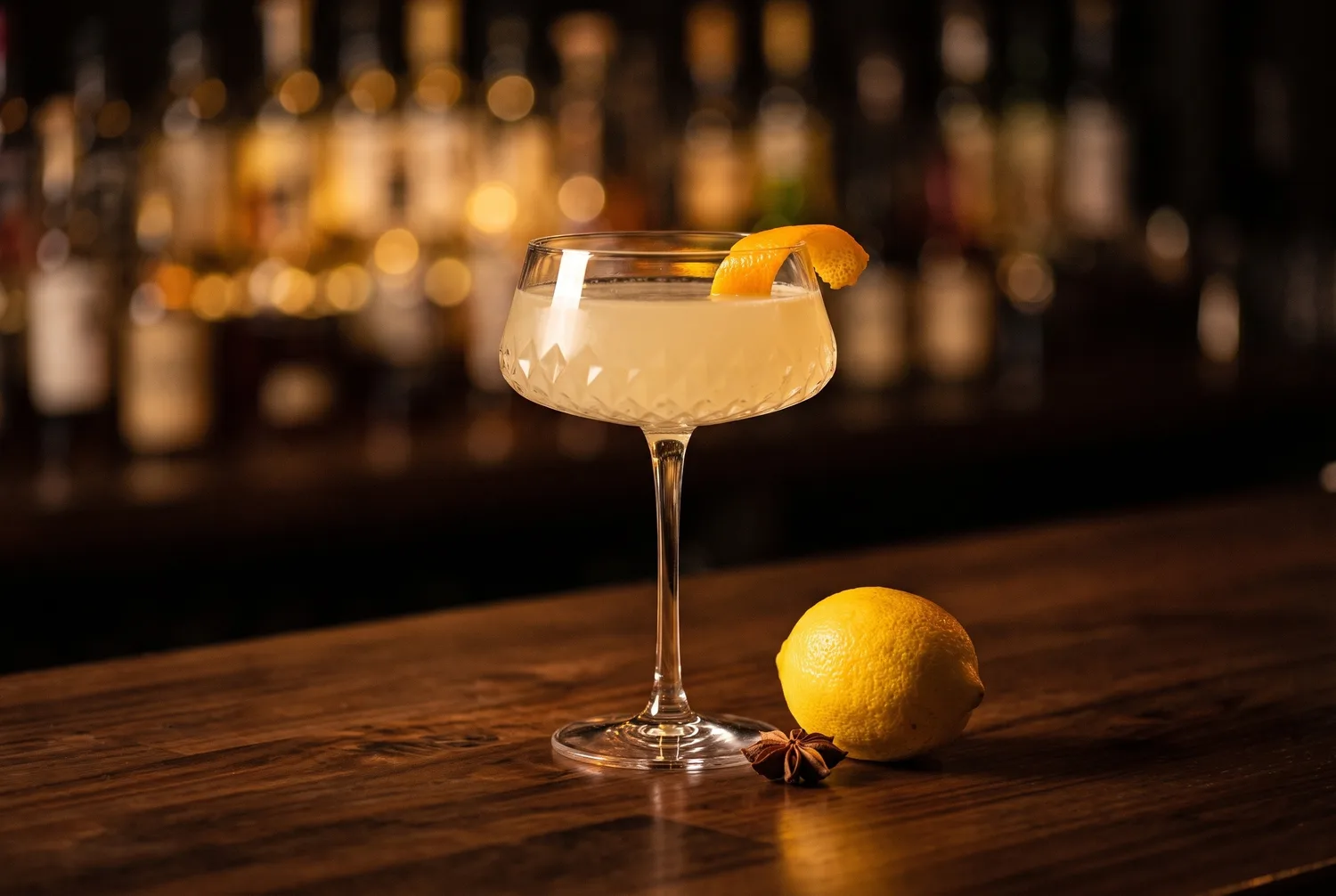
Straw-yellow, bright and faintly aniseed, the Corpse Reviver No. 2 is one of the easiest equal-parts cocktails to remember: gin, orange liqueur, Lillet blanc and lemon juice in identical measures, lifted by a few drops of absinthe. This Corpse Reviver recipe is the one Harry Craddock published in the Savoy Cocktail Book in 1930. The name, deliberately provocative, refers to an older family of cocktails that appeared in the nineteenth century; the No. 2 is by far the most served today. Lillet blanc, an aromatised wine from the Bordeaux region, brings a fruity softness that rounds off the acidity of the lemon. Serve it as a very cold aperitif.
Ingredients
- 30 ml gin
- 30 ml triple sec (orange liqueur)
- 30 ml Lillet blanc
- 30 ml freshly squeezed lemon juice
- 1 dash absinthe, or a few drops to rinse the coupe
- Ice cubes for shaking
- 1 orange twist to garnish (optional)
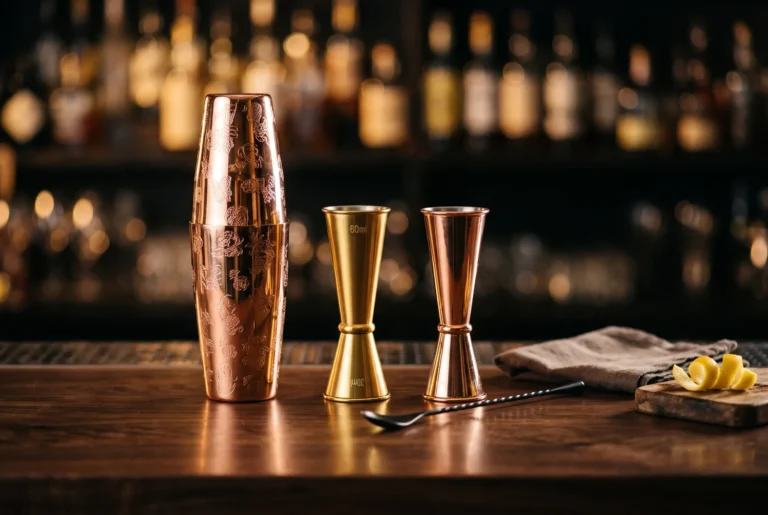
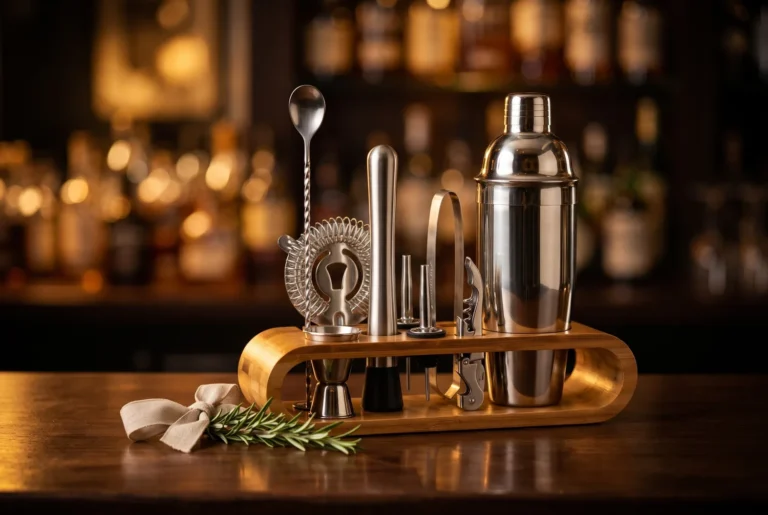
The tools
Method
- Chill the coupe in the freezer, or fill it with ice and water while you make the drink.
- Empty the coupe, add a few drops of absinthe and swirl to coat the inside, then discard the excess. You can also add a dash of absinthe straight into the shaker.
- Measure the lemon juice, the Lillet blanc, the triple sec and then the gin with the jigger and pour them into the shaker tin.
- Fill with ice, close the shaker and shake hard for 12 to 15 seconds.
- Strain through the Hawthorne strainer and the fine strainer into the absinthe-rinsed coupe.
- If you like, express an orange twist over the glass, then rest it on the rim.
Double straining catches the lemon pulp and ice chips for a cleaner texture; it is explained in our article on double straining. Shaking technique is covered in our complete guide to the cocktail shaker, and more models are in the Boston shakers range.
Bartender’s tip
Absinthe is very powerful: a few drops are enough, and any more lets its aniseed flavour dominate the whole drink. Rinsing the coupe, as for the Sazerac, gives the most discreet result. Equal parts make a generous cocktail; many bars prefer 22.5 ml of each ingredient for a smaller glass, without changing the balance. If you cannot find Lillet blanc, another white aromatised wine such as Cocchi Americano is often used instead. The structure, spirit, orange liqueur and lemon, is that of the White Lady; the Lillet softens it. These proportions are gathered in our cheat sheet of classic cocktail measures.
Variations
The Corpse Reviver No. 1, published in the same book, is an entirely different cocktail, built on cognac, calvados and sweet vermouth. Some bartenders swap the triple sec for a richer curaçao, or add a cherry as a garnish. For an alcohol-free version, rinse the coupe with a few drops of star anise infusion, then shake 30 ml lemon juice, 30 ml white grape juice, 20 ml orange syrup and 30 ml cold juniper or green tea infusion, and strain into the coupe.
Please drink responsibly. Alcohol abuse is dangerous for your health.