A cocktail recipe is, first and foremost, a set of proportions. This quick reference brings together the cocktail measurements for 15 great classics, all given in millilitres and identical to those on our recipe pages, so you can find them at a glance behind the bar. The drinks are grouped by family: stirred drinks, built on a spirit and a vermouth; sours, which balance spirit, acidity and sweetness; equal-parts recipes; and long drinks, topped up with something fizzy. For each family you will find the logic behind the ratios and the jigger that makes measuring easier.
These measurements are a reliable starting point, not a fixed rule: the strength of a spirit, the acidity of a lemon or the richness of a syrup varies from one bottle or fruit to the next. Measure precisely first, taste, then adjust a quarter measure at a time. For the measuring technique itself, our guide The jigger: measuring your cocktails properly covers everything from the start.
Why millilitres, and why the odd quarter measures
Most classic recipes were written in the United States, in ounces. In bar practice one ounce equals 30 ml, which is why measurements so often land on multiples of 7.5 ml: 22.5 ml for three quarters of an ounce, 45 ml for an ounce and a half. It is not fussiness: these figures keep the original balance exactly. Our table for converting oz to ml sets out every equivalent, from the dash to the bar spoon.
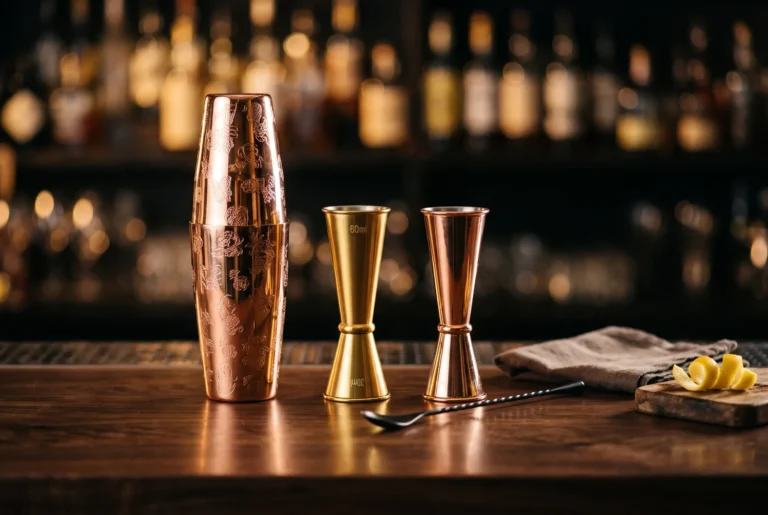
In practice, three volumes cover almost everything: 20 ml, 30 ml and 45 ml. A set of two Japanese jiggers, 30/60 and 30/45 ml, gives you 30, 45 and 60 ml directly; a matte black 20/40 ml jigger measures the 20 and 40 ml doses common in sours without any arithmetic. For quarter measures, a jigger with internal markings, such as the gold graduated Japanese jigger, 30/60 ml, saves you guessing by eye.
Stirred cocktails: spirit and vermouth
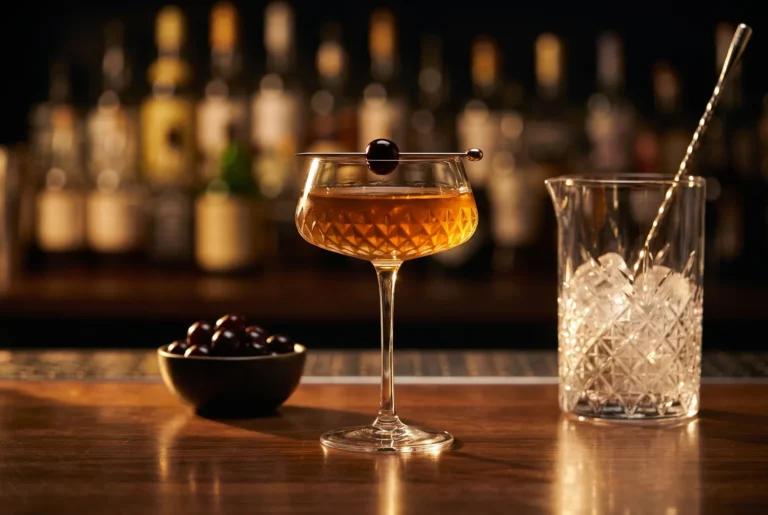
These recipes contain no juice or syrup: the spirit leads, the vermouth or bitter softens it, and dilution happens in the mixing glass. The most common ratio is around two to three parts spirit to one part vermouth; the Dry Martini, very dry, goes much further.
- Dry Martini: 60 ml gin, 10 ml dry vermouth, olive or lemon twist.
- Manhattan: 50 ml rye whiskey or bourbon, 20 ml sweet vermouth, 2 dashes aromatic bitters.
- Rob Roy: 45 ml blended Scotch, 25 ml sweet vermouth, 1 dash Angostura.
- Boulevardier: 45 ml bourbon, 30 ml Italian bitter, 30 ml sweet vermouth.
The Boulevardier is built like a Negroni with bourbon in place of gin, and a slightly more generous measure of spirit. In these recipes precision matters all the more because no juice hides an excess: too much vermouth shows straight away. The mixing-glass technique is explained in our guide to stirred cocktails.
Sours: spirit, acidity and sweetness
The largest family. The principle: a spirit base, fresh citrus juice and a sweet element, shaken together. The reference ratio is explained in our article on the 2-1-1 rule; the recipes below are variations on it, often a little drier.
- Daiquiri: 60 ml white rum, 20 ml lime juice, 15 ml sugar syrup.
- Gimlet: 60 ml gin, 20 ml lime juice, 15 ml sugar syrup.
- Margarita: 50 ml blanco tequila, 20 ml triple sec, 15 ml lime juice.
- Sidecar: 50 ml cognac, 20 ml triple sec, 20 ml lemon juice.
- Pisco Sour: 60 ml pisco, 30 ml lime juice, 20 ml sugar syrup, 1 egg white, a few drops of bitters.
- Cosmopolitan: 40 ml citrus vodka, 15 ml triple sec, 15 ml lime juice, 30 ml cranberry juice.
Notice how closely the Daiquiri and the Gimlet are related: same measurements, only the spirit changes. In the Margarita and the Sidecar, the orange liqueur provides the sweetness, which is why there is no syrup. The Pisco Sour adds an egg white for texture: it is first shaken without ice, using the dry shake technique.
The bartender’s tip
For a sour, always pour the cheapest ingredients first: juice, syrup, then the spirit last. If a measure overflows or a pour goes wrong, you only lose a little lemon and sugar.
Equal-parts recipes
Some classics rest on a beautifully simple idea: four ingredients, four identical measures. You just measure the same amount four times, which makes them excellent practice for refining your jigger technique.
- Last Word: 22.5 ml gin, 22.5 ml green Chartreuse, 22.5 ml maraschino liqueur, 22.5 ml lime juice.
- Paper Plane: 22.5 ml bourbon, 22.5 ml Aperol, 22.5 ml Amaro Nonino, 22.5 ml lemon juice.
The 22.5 ml measure is three quarters of an ounce. If your jigger does not mark it, you can round up to 25 ml for all four ingredients: the balance stays the same, the drink is simply a little larger. What matters is using the same measure for every ingredient.
Long drinks: a base and a top-up
Here the fizzy mixer makes up most of the volume. The base measurements need to be precise, but the top-up can vary with the size of the glass and the amount of ice.
- Mojito: 50 ml white rum, 30 ml lime juice, 20 ml sugar syrup, 8 to 10 mint leaves, 60 to 80 ml soda water.
- Moscow Mule: 45 ml vodka, 10 ml lime juice, 120 ml ginger beer.
- Americano: 30 ml Italian red bitter, 30 ml sweet vermouth, 60 to 90 ml soda water.
Measure the base with the jigger, then add the top-up last, straight into the glass, to keep the bubbles. With the Americano, the ratio of bitter to vermouth stays fixed; it is the amount of soda water that sets the intensity, depending on whether you prefer it more bitter or lighter.
Adjusting measurements to your taste and ingredients
Once you know the proportions, a few simple adjustments are enough to adapt a recipe without changing its character:
- Too sour: add 2.5 to 5 ml of syrup, no more, then taste again.
- Too sweet: add the same amount of citrus juice, or cut the syrup by a quarter measure.
- For two drinks: double every measurement, but shake in a tin large enough to leave room for the ice.
- For a lighter drink: reduce the spirit by a third and keep the other ingredients; the sour-sweet balance stays right.
- For an alcohol-free version of a sour: replace the spirit with a cold infusion or a lightly sweetened juice, and keep the same citrus-to-syrup ratio.
To keep all these measures within reach, one jigger is not always enough: it is handy to keep two of different sizes on the counter. Our Jiggers range brings together Japanese, classic and graduated models; the graduated 2-in-1 jigger, 30/60 ml is a good choice if you prefer a single tool marked on the inside.
Frequently asked questions
How much spirit is usual in a cocktail?
In the classic recipes in this reference, the spirit base is between 40 and 60 ml. Equal-parts recipes spread the alcohol across several 22.5 ml ingredients. You can reduce the base by a third for a lighter drink, keeping the other proportions.
Can you measure without a jigger?
A tablespoon holds about 15 ml and will do at a pinch, but the measure stays approximate. For recipes with small doses such as the Last Word, a graduated jigger gives far more consistent results from one glass to the next.
Why don’t my cocktails taste like the ones at the bar?
Often because of the citrus and syrup: juice squeezed in advance or a more concentrated syrup shifts the balance. Squeeze your lemons at the last moment, measure precisely and then adjust in small quarter measures.
Should measurements change with the size of the glass?
Not for drinks served without ice: the measurements make roughly one drink, to be served in a medium-sized coupe. For long drinks, it is the amount of top-up that adapts to the glass, not the base.
Further reading
Please drink responsibly. Alcohol abuse is dangerous for your health.