The cocktail coupe and the Martini glass do the same job: they hold a short drink, served without ice and properly cold. Yet they are not held the same way, they do not forgive the same clumsy moments and they do not flatter the same recipes. This comparison explains what really separates them, where each one comes from, which cocktails to serve in them and which to buy first if you are setting up your bar. For an overview of every glass shape, our guide which glass for which cocktail is the place to start.
The quick answer: coupe or Martini glass?
If you remember only one thing: the coupe is more versatile and easier to live with, while the Martini glass is more striking but more temperamental. Depending on how you drink and entertain:
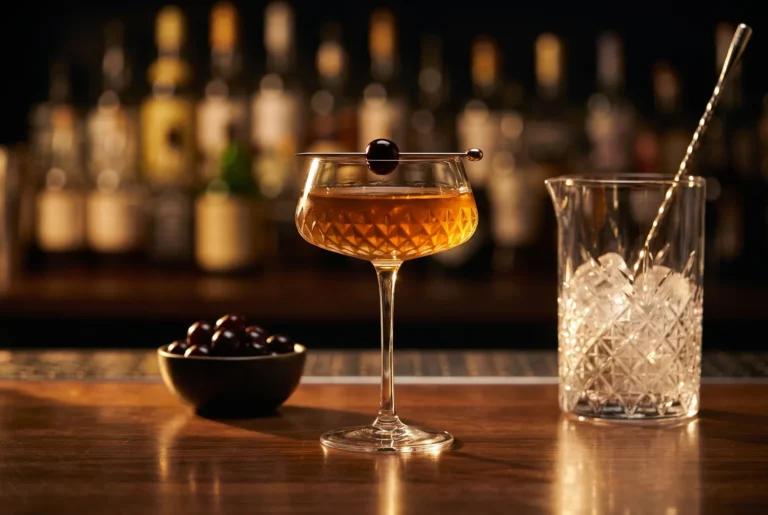
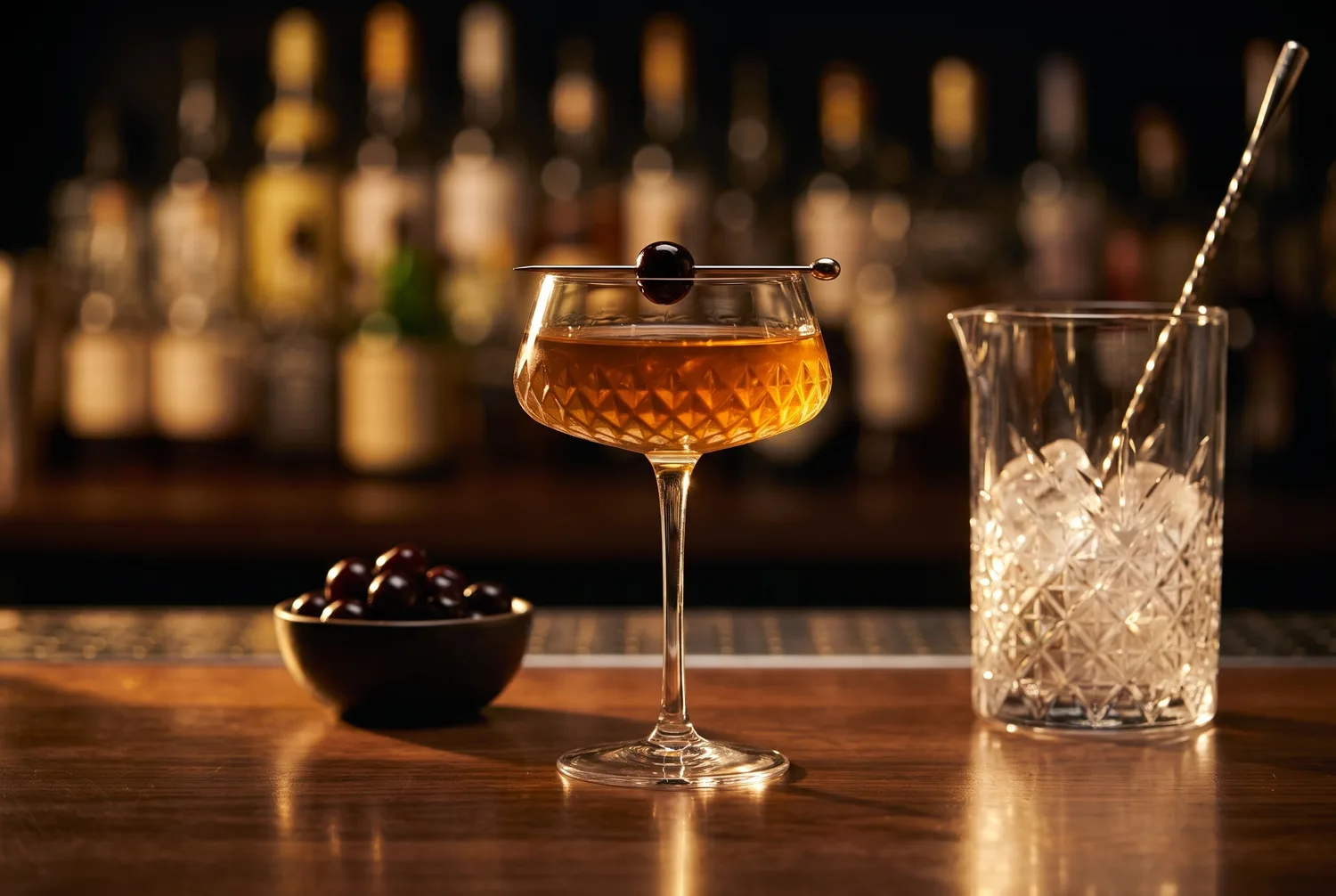
- You are starting out and want a single stemmed glass → the coupe: it serves frothy sours as well as stirred drinks. Our 300 ml engraved cocktail coupe costs €26.90.
- You mostly make stirred cocktails (Manhattan, Martinez, Rob Roy) → the coupe again, paired with a 700 ml crystal-cut mixing glass at €37.90.
- You often entertain and guests drink standing up → the coupe, which is far less likely to spill when people walk about or raise a toast.
- You love a very dry Martini and Art Deco style → the Martini glass, alongside your coupes rather than instead of them.
All our stemmed and serving glasses are gathered in the cocktail glasses category.
Two shapes, two behaviours
The coupe: rounded and shallow
A coupe has a wide, rounded bowl whose rim curves slightly inwards. That curve holds the liquid in: when the glass moves, the drink climbs the wall rather than slopping over the edge. This is the main reason bars adopted it for table and counter service. Its width also gives a generous surface to the foam of egg white cocktails such as the Pisco Sour or the Clover Club, and it easily takes a garnish on a pick.
The Martini glass: an open cone
A Martini glass has straight sides that open into a V from the stem. The wide mouth exposes a large surface of the drink to the air, which lifts the aromas of dry, aromatic recipes. The trade-off is that the slightest jolt sends the liquid towards the rim, and you need a steady hand to carry it full. Very wide, very large models are the trickiest: a short drink looks lost in them, and filling one to the brim lets it warm up before you have finished.
What they share: the stem
Both glasses stand on a stem, and that is no detail. A cocktail served “up”, without ice, has nothing left to keep it cold: holding the glass by the stem stops the warmth of your hand from heating it. Chill the glass before serving too, a few minutes in the freezer or filled with ice and water while you make the drink.
A little history, without the legends
The coupe began life as a champagne glass, widely used in the nineteenth and early twentieth centuries. You may have heard that its shape was moulded on the breast of a queen or a royal favourite: it is a stubborn legend with nothing to support it. The flute later replaced it for champagne, because it keeps the bubbles better, and the coupe found a second life in cocktail bars, where it came back strongly with the revival of the great classics.
The conical stemmed glass took hold in the twentieth century, carried by the geometric look of Art Deco, and went on to become the very image of the cocktail, to the point of borrowing its name from the most famous of them. For a home bartender the lesson is simple: both shapes are legitimate for the same recipes, and the choice comes down to use and taste rather than a historical rule.
Which cocktails suit each glass?
Both glasses take short drinks, shaken or stirred, then strained without ice. A few nuances will help you choose:
- Lean towards the coupe for sours and frothy drinks (White Lady, Pisco Sour, Clover Club), shaken citrus cocktails (Daiquiri, Sidecar) and amber stirred drinks such as the Manhattan.
- Lean towards the Martini glass for dry, crystal-clear drinks where aroma comes first, such as the Dry Martini or the Vesper.
- Either will do for the Cosmopolitan, the Aviation or the Last Word: use whichever you have to hand, well chilled.
Neither suits drinks served over ice: an Old Fashioned calls for a rocks glass, a Mojito or a Collins for a highball. Our articles on the Moscow Mule mug and the tiki mug cover the other families in this series.
Capacity: the question people forget
A short cocktail rarely comes to more than 90 to 120 ml once shaken or stirred, dilution included. A glass that is too small overflows; one that is too large makes the serve look mean and pushes you to fill it to the brim, which makes it hard to carry. A coupe of around 300 ml total capacity leaves the margin needed for foam and garnish without looking empty. With Martini glasses, beware of the giant models of the 1990s: they force you either to inflate the measures or to serve a half-empty glass.
The bartender’s tip
Always make the cocktail in the exact quantity the glass needs: a dash too much juice or a rough measure is enough to make a coupe overflow. A graduated jigger and careful straining are worth more than a bigger glass.
The tools that go with your stemware
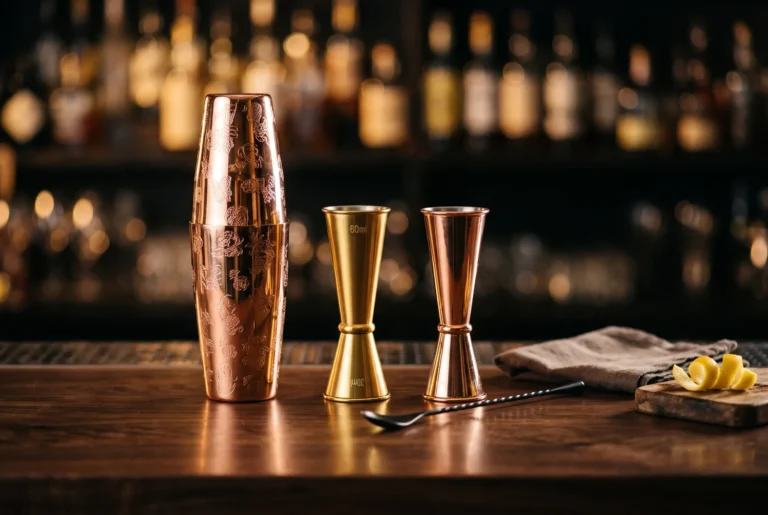
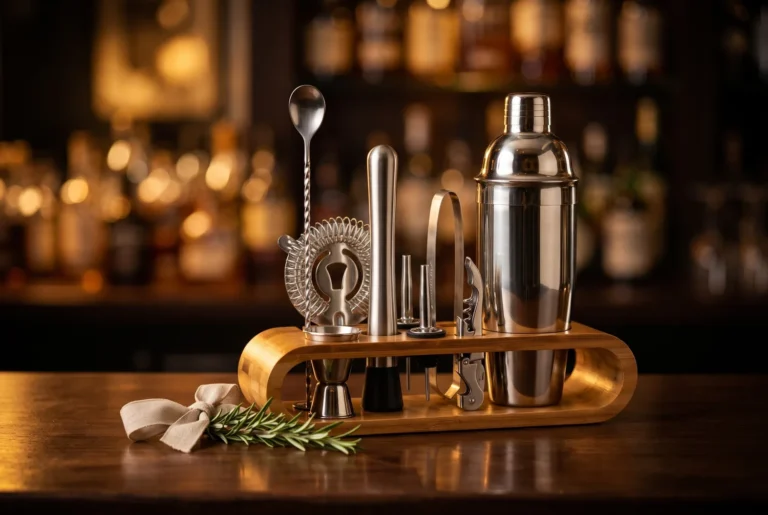
A drink served without ice is judged on its clarity and its temperature. For stirred recipes you need a mixing glass, a bar spoon and a julep strainer: for example the 700 ml diamond-cut mixing glass at €29.90, a 30 cm twisted bar spoon at €9.90 and the stainless steel julep strainer at €15.90. For shaken recipes, a fine-mesh strainer (€3.90) catches the ice shards and pulp that would cloud the surface of the glass: this is double straining.
If you are looking for a present for a cocktail lover, a pair of coupes and a mixing glass make a coherent set; more ideas are gathered on our cocktail gift ideas page.
Caring for and storing stemmed glasses
Stemmed glasses are fragile where the bowl meets the stem. Wash them by hand in hot water with very little detergent, holding them by the bowl rather than the foot, which snaps when the glass is twisted during drying. Dry them with a microfibre or linen cloth to avoid streaks. Store them upright on their foot rather than upside down on the rim, which is the thinnest part. Our guide to organising your home bar has a few ideas for storing glassware.
Frequently asked questions
What is the difference between a coupe and a Martini glass?
A coupe has a rounded, shallow bowl that holds the liquid in well; a Martini glass has a flared conical shape that is more open and less stable. Both are used for short drinks served without ice.
Can you serve a Martini in a coupe?
Yes. Many bars serve the Dry Martini in a coupe because it is easier to carry. The conical glass puts the aromas slightly more forward, but the choice remains a matter of taste.
What capacity should a cocktail coupe have?
A coupe of around 300 ml total capacity suits most short cocktails, garnish and foam included, without looking empty.
Should you chill the glass before serving?
Yes, for any drink served without ice: a few minutes in the freezer, or ice and water in the glass while you mix, emptied just before you strain.
Further reading
Please drink responsibly. Alcohol abuse is dangerous for your health.