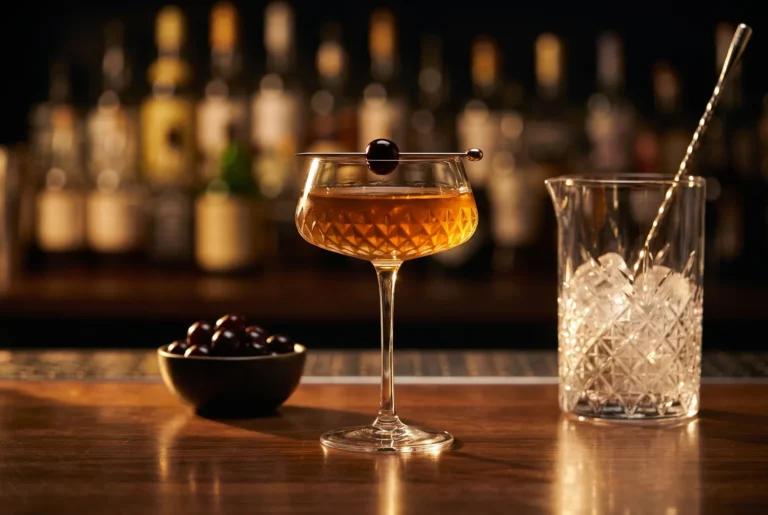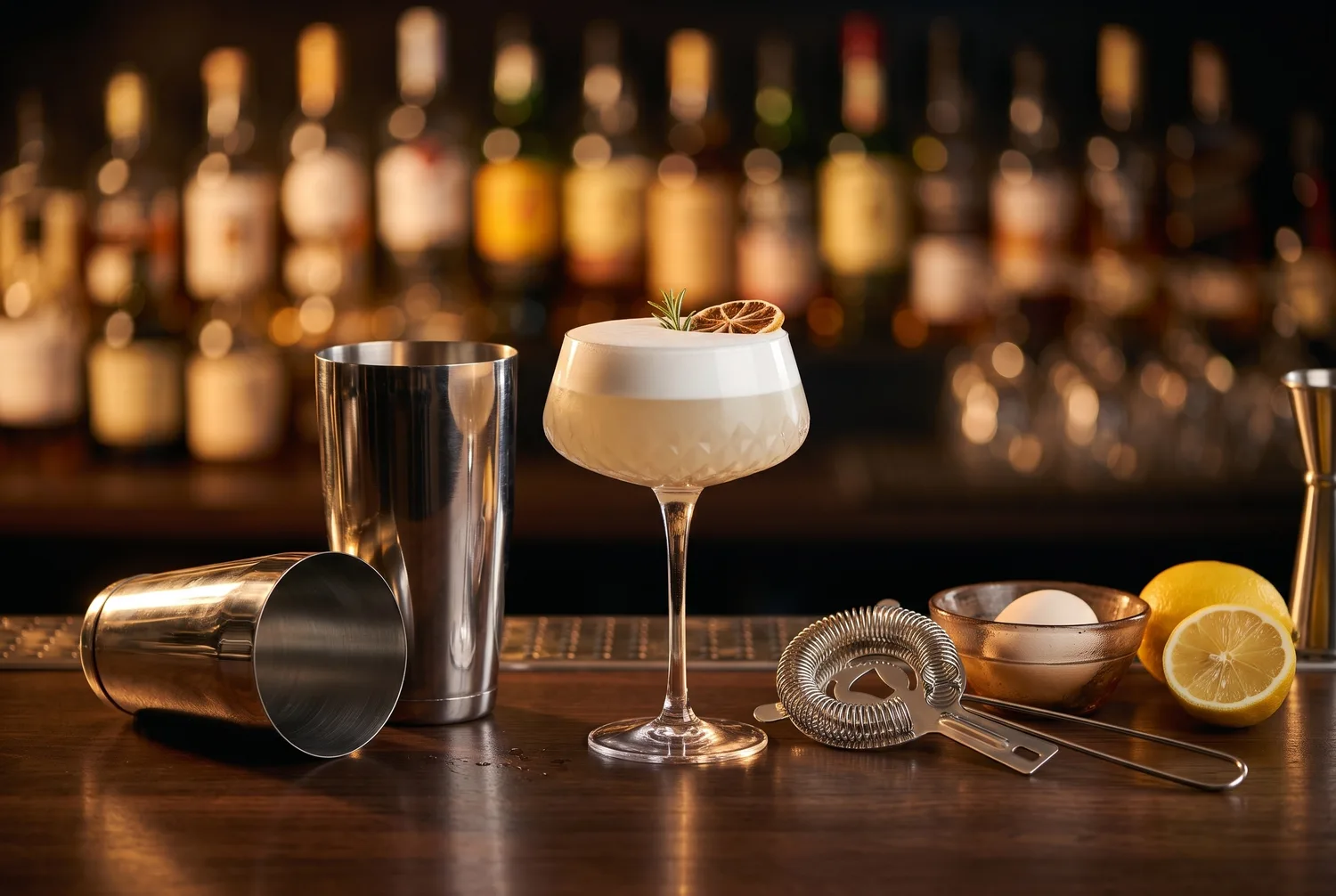
A layer of dense, silky white foam on a well-chilled sour: that is the signature of egg white cocktails. To achieve it, bartenders use the dry shake, which means first shaking the ingredients without ice, then a second time with ice. Its variation, the reverse dry shake, swaps the order of the two stages. This guide explains why these techniques work, how to carry them out with a Boston or a cobbler, how long to shake, and how to replace egg white with aquafaba. It is part of our complete guide to the cocktail shaker.
Why shake without ice?
Egg white is made up of water and proteins. When it is shaken hard, these proteins unfold and trap tiny air bubbles: the same principle as whisking egg whites to stiff peaks. Without ice, the liquid stays at room temperature and more fluid, and all the movement goes into building the emulsion. Ice, on the other hand, chills and dilutes: if you shake straight over ice, the drink is cold before the foam has had time to form, and it stays thinner and less stable.
The dry shake therefore whisks, and the second shake over ice chills and dilutes. Both stages are necessary: a cocktail that has only been dry shaken would be frothy, but lukewarm and too strong.
The dry shake step by step
- Measure the ingredients into the small tin of the shaker: spirit, citrus juice, syrup, then the egg white, about 20 to 30 ml, or one small egg white.
- Close without ice and shake hard for 10 to 15 seconds.
- Open: the mixture should already be frothy and have gained volume.
- Add the ice, close again and shake for another 10 to 15 seconds, until the tin is very cold.
- Strain into a chilled glass, ideally double straining, then let it rest for a few seconds: the foam rises and settles on the surface.
With a Boston, the dry shake needs a little more care: without the cold of the ice, the metal does not seal as well and the closure is less watertight. Close it with a firm tap, hold both tins tightly and shake over the sink the first few times. Our guide how to use a Boston shaker explains how to seal it. With a cobbler, keep your hand on the cap and open promptly after the second shake, as explained in our guide to using a cobbler shaker.
The bartender’s tip
A trick widely used by bartenders: take the spring off a Hawthorne strainer and drop it into the shaker for the dry shake. It acts like a small whisk and makes the foam finer. Remember to take it out before you add the ice.
The reverse dry shake: the order reversed
The reverse dry shake starts with ice. First shake all the ingredients over ice, as for a classic sour. Then strain the drink into the other tin to remove the ice, close it again and shake a second time, this time without ice, for 10 to 15 seconds. Finally pour into the glass through a fine strainer.
Many bartenders find that this method gives a denser and more stable foam, because the mixture, already cold and slightly diluted, emulsifies better. The drawback: the drink warms up a little during the second shake. Serve it in a well-chilled glass and without delay. You also need two vessels, which comes naturally with a Boston, since its two tins are used in turn.
Dry shake or reverse dry shake: which to choose?
- The dry shake is the easiest to learn and the most common. It gives a very good foam and a perfectly cold drink.
- The reverse dry shake usually gives a thicker, tighter foam, at the cost of an extra straining step.
- In both cases, the freshness of the egg white, the energy of the shake and double straining matter as much as the order of the stages.
Try both on the same recipe, for example a Whisky Sour or a Pisco Sour, and compare the texture. The raspberry Clover Club shows off the foam nicely on a colourful drink.
Aquafaba, the alternative to egg white
Aquafaba is the cooking liquid from chickpeas, the liquid you find in tins. It foams in much the same way as egg white and suits people who do not eat eggs. Allow about 20 to 30 ml per cocktail and apply exactly the same techniques: dry shake or reverse dry shake. Its flavour is discreet once mixed with citrus, but taste it first: some tinned chickpeas are salted.
For egg white, use very fresh eggs kept in the fridge. Pasteurised egg white, sold in cartons, is a practical solution, particularly for vulnerable people or pregnant women, who are advised against raw eggs. These techniques also apply to alcohol-free drinks: a mix of lemon juice, syrup and egg white or aquafaba, lengthened with a little water, makes a very refreshing frothy drink.
Useful tools
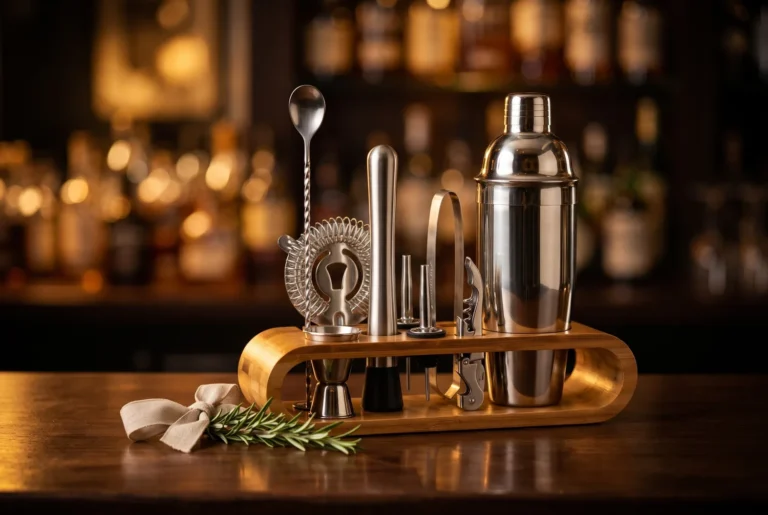
A two-piece shaker is the most practical for the reverse dry shake: the 3-piece Boston shaker set brings together both tins and the strainer. To strain, pair a stainless steel Hawthorne strainer with spring, whose spring can double as a whisk, with a fine-mesh strainer that catches any strands of egg white: this is the principle of double straining. Measure the egg white precisely with a jigger, such as a graduated 2-in-1 30/60 ml jigger. Other models are available in the Boston shakers and cobbler shakers sections.
How long should a dry shake last?
Allow 10 to 15 seconds of hard shaking without ice, then 10 to 15 seconds with ice. Beyond that, the foam hardly improves.
Why does my foam collapse?
Most often the dry shake was too short or too timid, or the egg white was not fresh enough. Shake harder, strain through a fine strainer and serve straight away.
Can I dry shake with a cobbler shaker?
Yes. Hold the cap firmly during the shake without ice, then open quickly after the shake over ice so that the lid does not get stuck.
How much aquafaba replaces one egg white?
About 20 to 30 ml of aquafaba replaces one small egg white in a cocktail. The dry shake and reverse dry shake techniques stay the same.
Further reading
Please drink responsibly. Alcohol abuse is dangerous for your health.