A small conical sieve with a tight mesh, the cocktail fine strainer is held over the glass while the main strainer keeps the ice back in the tin. It is not needed for every drink: on a stirred Negroni or a Mojito it adds nothing at all. But as soon as fruit, herbs or a hard shake come into play, it makes the difference between a cocktail that feels clean on the palate and a glass with bits floating in it. This article goes through the situations where it is essential, those where you can do without it, and the details worth checking when you choose one.
To see where the fine strainer sits among the other types, start with our guide to cocktail strainers: Hawthorne, julep and fine strainer. The technique itself, which combines two strainers, is covered in the article on double straining; here we focus on the practical question: when should the fine strainer come out?
What a fine strainer catches
The main strainer, Hawthorne or julep, stops the ice cubes and the larger pieces. Its openings, however, are still a few millimetres wide. The fine strainer, with its metal mesh, catches everything that slips between the coils of the spring or through the holes of the julep:
- Ice shards that break off the cubes during a hard shake.
- Bits of herbs: mint, basil, thyme or rosemary, bruised or muddled.
- Pulp and pips from citrus squeezed by hand.
- Pieces of fruit crushed in the shaker: berries, cucumber, pineapple.
- Particles of spice: pepper, cinnamon, grated zest.
What passes through is the liquid and the tiny air bubbles that give a shaken cocktail its texture. So the fine strainer does not change the flavour: it changes the mouthfeel and the look of the drink.
When it is essential
Shaken cocktails served without ice
This is the most common use. A Daiquiri, a Gimlet or a sour served in a coupe has no ice left to hide the shards: they float on the surface, melt in the glass and water the drink down as the minutes pass. Strained through a fine strainer, these cocktails arrive clear, with a smooth surface. That is why a fine strainer almost always goes hand in hand with the coupe and the martini glass.
Muddled or bruised herbs
Once a herb is crushed in the shaker, it tears into small pieces that get caught between the teeth. The fine strainer holds them all back. It is essential for mint or basil cocktails served in a coupe. For drinks built in the glass where the herb stays visible, such as the Mojito, you do not strain: the mint is part of the presentation.
Crushed fruit and purées
Raspberries, blackberries, cucumber or pineapple release their juice when muddled, but also pips and fibres. With a thick purée the mesh can clog: tap the edge of the strainer gently against the glass, or stir the contents of the sieve with the tip of a bar spoon to help the liquid through.
Freshly squeezed juice
A lime squeezed with a hand press lets pulp and pips through. You can strain the juice as you squeeze it, or let the fine strainer do the job when you pour. In a sour, a little pulp does not bother everyone; for a cocktail served in a coupe, it is better kept out.
Homemade syrups and infusions
The fine strainer is useful during preparation too. A ginger, raspberry or spice syrup can be strained through it before bottling, and so can a tea or an infusion made for an alcohol-free version. For a perfectly clear syrup, strain it a second time through a paper coffee filter.
The bartender’s tip
Keep a clean fine strainer next to your chopping board. It is as useful for straining freshly squeezed juice as it is for serving a cocktail, and it is often the one tool missing when you are making a homemade syrup.
When you can skip it
Used every single time, the fine strainer slows you down for no benefit. You can leave it out:
- For stirred cocktails made in a mixing glass: the ice hardly breaks, and a julep strainer is enough. Our article on the Hawthorne strainer and tight straining also shows how to hold back more debris by closing the gate.
- For cocktails served over ice: in a rocks glass or a highball full of cubes, a few shards go unnoticed and melt with the rest.
- For drinks served over crushed ice, such as juleps or swizzles: the crushed ice is intended.
- When the ingredient is part of the presentation: the mint in a Mojito, the lime wedges in a Caipirinha.
- For long sparkling drinks, where the soda or sparkling wine is poured straight into the glass.
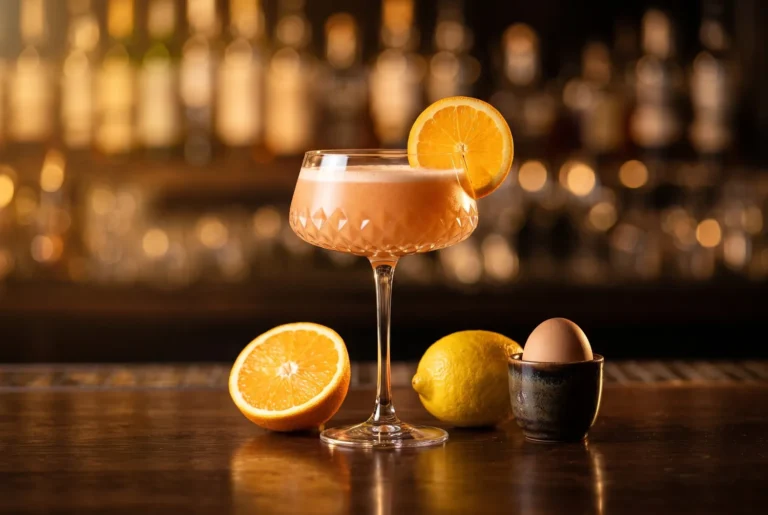
Egg white is open to debate: many bartenders fine-strain an egg white sour for a tighter, more even foam, while others do not bother. Try both and keep the method you prefer.
Choosing a fine strainer
The basic design is simple, but a few details matter in daily use:
- Diameter: a sieve of about 5 to 8 cm covers a coupe without overhanging. A 5 cm tight-mesh fine strainer is easy to store and suits cocktails served one at a time.
- Mesh size: the tighter the mesh, the cleaner the drink, but the slower the straining with a purée.
- Conical shape: the cone gathers the liquid into a single stream and avoids splashes. A set of 2 conical fine strainers lets you keep one for service and one for syrups.
- Handle: long enough to hold comfortably without getting in the way of the pour, ideally with a hook or lug so the strainer can rest on the rim of the glass.
A fine strainer always works alongside a main strainer. For shaken drinks, a stainless steel spring Hawthorne strainer is the usual partner; a decorative model such as the wolf’s head Hawthorne strainer does exactly the same job. All models are gathered in our cocktail strainers range.
Looking after the mesh
A fine mesh traps sugar, pulp and fibres, which dry quickly. Rinse the strainer under hot water straight after use, running the water from the outside towards the inside of the cone to loosen the debris. If fibres stay caught, use a small soft brush. Avoid abrasive sponges and sharp objects, which can bend or pierce the mesh. Let the strainer air-dry before putting it away.
Does a fine strainer replace a Hawthorne strainer?
No. On its own it clogs with ice and straining becomes very slow. It is used in addition to a Hawthorne or julep strainer, which hold back the ice.
Do I need a fine strainer for a Margarita?
Served in a coupe, yes: it catches the ice shards and the lime pulp. Served over ice in a rocks glass, it is optional.
Can I use a kitchen sieve?
A small fine-mesh kitchen sieve will do in a pinch. It is often wider and less handy to hold over a coupe, but the principle is the same.
Does a fine strainer change the taste of a cocktail?
No, it changes the texture and the look. By removing ice shards, it also limits further dilution once the drink is served.
Further reading
Please drink responsibly. Alcohol abuse is dangerous for your health.