Two cups set back to back, a 30 ml and a 60 ml measure: on paper, every jigger looks much the same. Yet between the tall, slender Japanese jigger and the wide, squat classic jigger, the difference is obvious from the very first cocktail. The shape changes how you read the markings, how you hold the tool, how likely you are to spill and even the pace at which you work. This guide compares the two designs point by point to help you choose the one that matches the way you work, whether you make the odd cocktail now and then or a whole round for your guests. It complements our complete guide to measuring cocktails with a jigger.
Two shapes, one principle
A jigger combines two measures in a single tool: a small cup and a large one, joined at their base. You fill one or the other depending on the amount the recipe calls for, then tip it into the shaker or the mixing glass. Both families share this principle and, for the same capacity, they measure exactly the same volume. What sets them apart is the geometry of the cups.
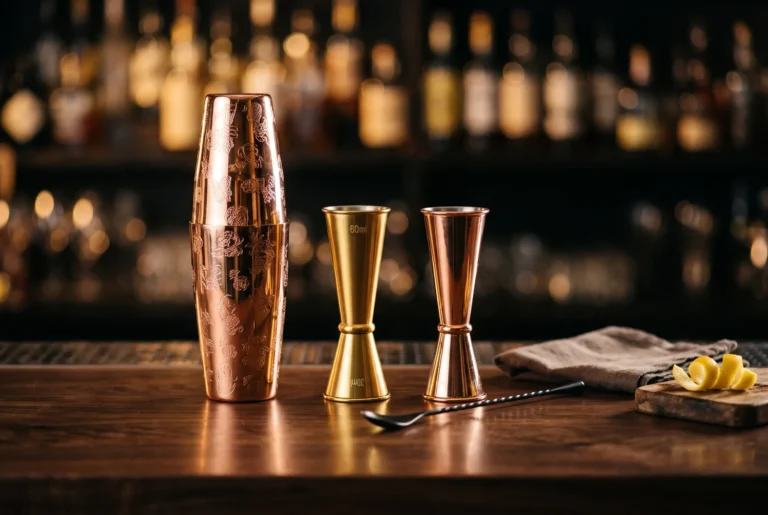
- The classic jigger, also called a double jigger or bell jigger, is made of two wide, flared cones joined at the tip. It is short, with a generous opening.
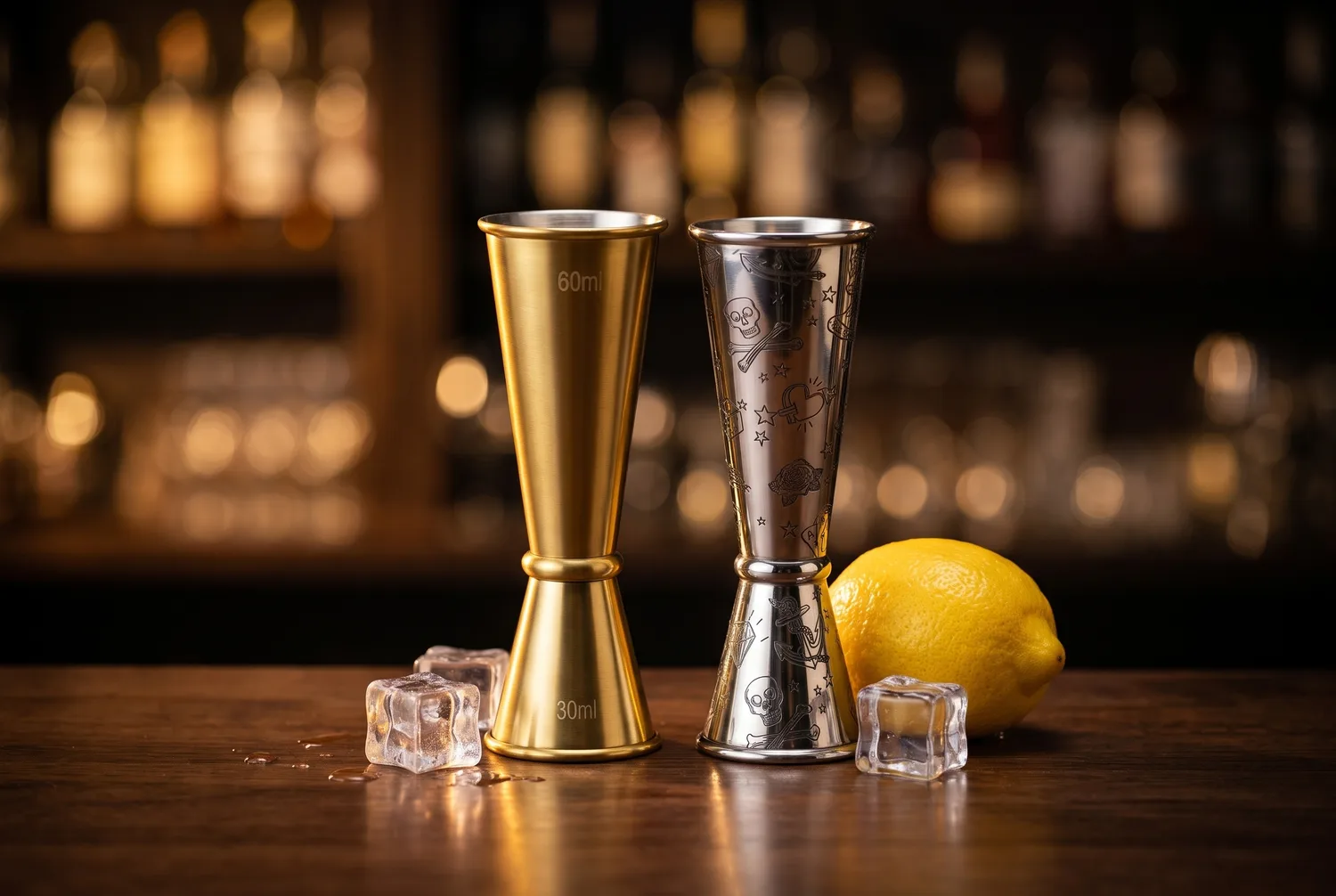
- The Japanese jigger has taller, narrower cups with straighter sides. The whole tool is more slender, often with a fine, crisp waist in the middle, and the markings are engraved inside.
This slender style is associated with Japanese bars, known for the care they bring to every movement. It has spread widely through cocktail bars around the world, without ever replacing the classic design, which is still a familiar sight behind the counter.
Markings and readability: the Japanese jigger’s advantage
A recipe does not always call for 30 or 60 ml. Measures of 15 ml, 20 ml or 22.5 ml are common, especially in recipes converted from American ounces. It is with these in-between measures that the shape of the cup matters most.
In a wide, flared cone, the surface of the liquid spreads quickly: a few millimetres of height represent a sizeable volume, and it is hard to hit a line halfway up accurately. In a narrow cup with almost vertical sides, the same amount takes up more height. The level rises more gradually, the lines are further apart and the eye finds them more easily. That is the main reason why bartenders who work with fine measures so often prefer a Japanese jigger.
The gold 30/60 ml Japanese jigger with markings shows the intermediate steps inside each cup. To read ounce measures from American recipes with confidence, keep our oz to cl and ml conversion chart close at hand.
And the classic jigger?
The classic jigger remains perfectly accurate for its two full measures, 30 and 60 ml, which cover a large share of recipes. Some models also carry engraved lines, but reading them takes a little more care because of the wide opening. An engraved 30/60 ml double jigger will serve you very well if your recipes mostly stick to round measures.
Accuracy and spills
A jigger is read when it is filled to the brim, with a slight meniscus. The wider the opening, the larger that surface, and the more volume a small difference in level represents. Conversely, the narrow opening of a Japanese jigger reduces the effect of slightly imprecise filling.
The wide opening of the classic design has another drawback: it overflows more easily when you pour quickly or your hand is not perfectly steady. Hence the habit, good practice with any jigger, of always measuring over the shaker rather than beside it. The Japanese jigger also empties more cleanly: its straight sides guide the liquid and leave fewer drops clinging to the rim.
The bartender’s tip
To check how accurate your jigger is, whatever its style, fill it to the brim with water and pour it into a graduated measuring jug. Then repeat the test with each inside line. You will know exactly how your model behaves, and which level to aim for when measuring in-between amounts.
Grip and technique
The shape also changes the way you hold the tool. A classic jigger is usually pinched between thumb and forefinger at its waist. Its wide base makes it stable: you can set it down on the work surface between measures without worrying about it tipping over.
A Japanese jigger is held more like a pencil, its waist resting between the index and middle fingers. This grip leaves the thumb free and lets you turn the jigger over with a simple flick of the wrist, which makes it very nimble when several ingredients follow one another. It takes a short while to get used to: a few practice runs with water help you find the right balance.
- You are just starting out: the classic jigger, stable and intuitive, needs no learning curve.
- You make several cocktails in a row: the pencil grip of the Japanese jigger brings speed and consistency.
- You have large hands: the tallest Japanese models offer a better grip than small, squat jiggers.
Capacities and finishes: choosing your model
A 30/60 ml capacity is the most versatile in both styles: it measures 30 ml and 60 ml directly, the two most common amounts. If you often follow British or American recipes, a 45 ml measure saves you measuring twice: the set of two Japanese jiggers, 30/60 and 30/45 ml, brings both sizes together.
As for material, stainless steel remains the benchmark: it does not hold odours, stands up to repeated washing and does not lose its shape. Gold, rose gold or engraved finishes take nothing away from accuracy; they simply need drying after each wash to keep their shine. The rose gold Japanese jigger with markings is one example. If you are still undecided, the 2-in-1 30/60 ml jigger with markings combines a classic shape with inside lines. Every model is shown in our jiggers range.
So, Japanese or classic jigger?
If you mainly make recipes with round measures, at your own pace, a classic jigger will do the job perfectly: simple, stable and readable at a glance. If you enjoy precise recipes, measures of 15 or 22.5 ml, or if you make several cocktails in a row, a Japanese jigger will give you clearer readings, fewer spills and a smoother technique. Many home bartenders end up owning both: one for everyday measures, the other for the fine ones. Either way, it is a consistent technique that makes a cocktail accurate, with or without alcohol.
Frequently asked questions
Is a Japanese jigger more accurate than a classic jigger?
For full measures, both are equally accurate at the same capacity. The Japanese jigger becomes more accurate for in-between measures, because its narrow cups make the inside markings easier to read.
How do you hold a Japanese jigger?
Like a pencil: the waist of the jigger sits between your index and middle fingers, so you can turn it over with a flick of the wrist above the shaker or mixing glass.
Which capacity should I choose for a first jigger?
A 30/60 ml model, which measures 30 ml and 60 ml directly. A second 30/45 ml jigger is useful if you often follow American recipes.
Is a jigger useful for alcohol-free drinks too?
Yes. Juices, syrups and infusions need the same balance between sourness and sweetness; measuring them with a jigger lets you reproduce an alcohol-free drink exactly.
Further reading
Please drink responsibly. Alcohol abuse is dangerous for your health.