Faced with a recipe, the same question keeps coming back: shaker or mixing glass? Both tools chill and dilute a cocktail, but they do not give the same result in the glass. The shaker whips, aerates and clouds the drink; the mixing glass chills it gently and keeps it clear and silky. The good news is that one simple rule settles the question in the vast majority of cases. This guide explains it, along with what each technique really changes, the well-known exceptions and examples of classic recipes sorted by method.
The basic rule: cloudy in the shaker, clear in the mixing glass
Look at the list of ingredients. If it contains only clear liquids (spirits, vermouths, liqueurs, bitters, clear syrups), the cocktail is stirred in a mixing glass. As soon as one ingredient is cloudy or thick, it is shaken.
- In the mixing glass: gin, whisky, rum, cognac, sweet or dry vermouth, Campari, Chartreuse, maraschino liqueur, bitters, a small amount of sugar syrup.
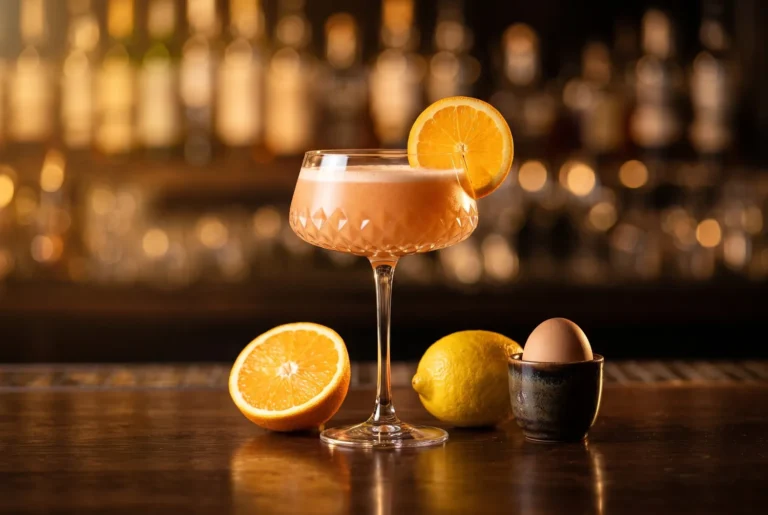
- In the shaker: citrus and fruit juices, purées, cream, milk, egg white, cream of coconut, honey or thick syrups, espresso coffee.
This rule is not a bartender’s affectation. Cloudy ingredients need to be mixed vigorously to blend with the spirit: lemon juice that is merely stirred would stay partly separate, and an egg white would not foam. Conversely, a mixture of spirits has nothing to emulsify; shaking it would only add air bubbles that cloud it.
What each technique changes in the glass
The shaker: fast chilling, airy texture
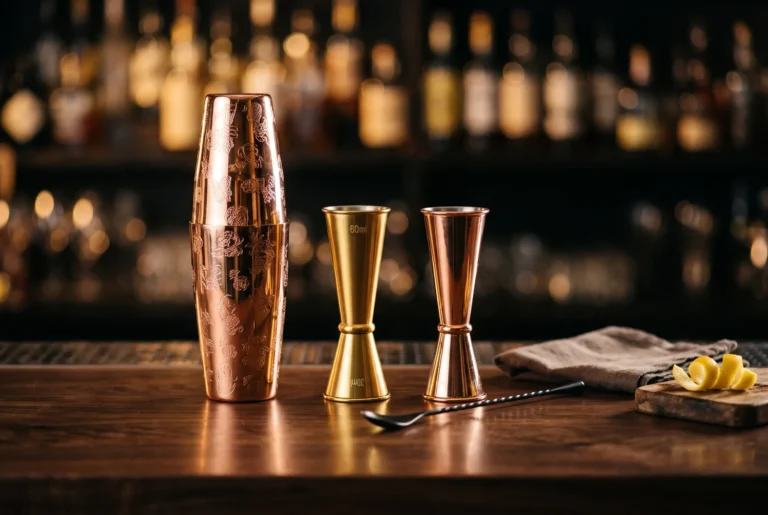
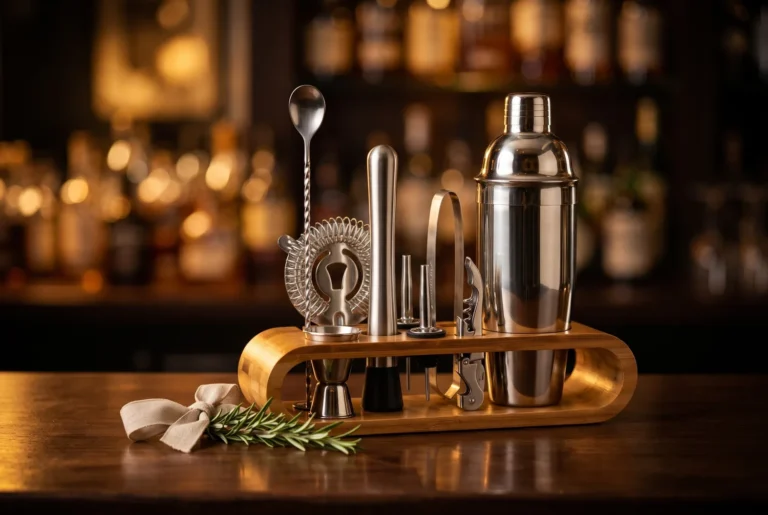
In the shaker, the ice breaks against the sides of the tin and mixes violently with the liquid. The cocktail chills very quickly, dilutes more in a short time and picks up tiny air bubbles. The result is light, lively, sometimes frothy, and slightly hazy as it leaves the shaker. That is exactly what you want for a sour or a fruit cocktail. The technique itself is explained in our guide on how to use a Boston shaker, and a 3-piece Boston shaker set will equip your home bar.
The mixing glass: gradual chilling, silky texture
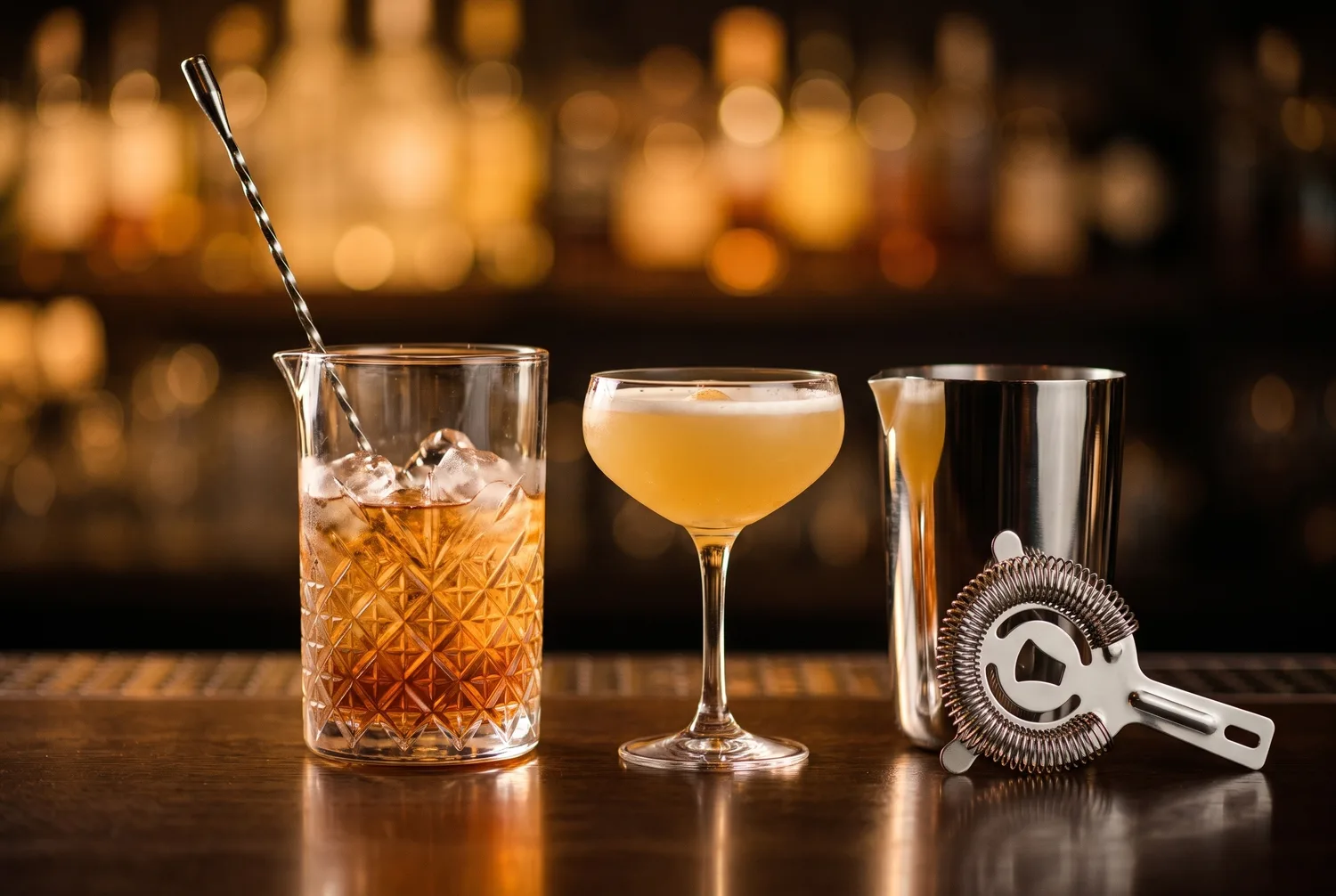
In a mixing glass, the ice turns with the liquid without breaking. Chilling and dilution are slower and easier to control: you taste, and stir for a few more seconds if needed. The cocktail stays perfectly clear, dense and silky on the palate, which shows off the aromas of the spirits and vermouths. For the step-by-step method, see how to use a mixing glass; a 700 ml cut-crystal mixing glass leaves enough room for two cocktails at once.
Examples of recipes sorted by method
A handful of great classics is enough to fix the rule in your mind.
- Stirred: the Negroni (gin, sweet vermouth, Campari), the Manhattan (whisky, sweet vermouth, bitters), the Dry Martini, the Martinez, the Vieux Carré, the Old Fashioned (stirred directly in the glass).
- Shaken: the Daiquiri (rum, lime, sugar), the Margarita, the Whisky Sour (with or without egg white), the White Lady, the Espresso Martini.
- Built in the glass: long drinks topped with soda water, tonic or ginger beer, such as the Moscow Mule. A sparkling ingredient is never shaken: it would lose its bubbles and build up pressure in the shaker.
Beware of the name trap: the Espresso Martini and the Martini are made in completely different ways. The first contains espresso, which is cloudy and rich in oils and has to foam; the second contains only gin and vermouth, and is stirred.
Exceptions and debated cases
The rule covers the essentials, but a few cases are worth knowing.
- The shaken Martini: some people prefer a shaken Martini, colder and slightly hazy. It is a matter of taste, not a mistake, but the texture is no longer the same.
- Cocktails built and then stirred: the Old Fashioned is stirred directly in its glass over a large ice cube, without a mixing glass. The logic is still that of a stirred drink: clear ingredients.
- Throwing: an intermediate technique in which the cocktail is poured from one vessel to another from a height. It aerates the mixture a little without clouding it as much as the shaker; it is sometimes used for wine- or vermouth-based cocktails.
- A very small amount of juice: when a clear cocktail contains only a dash of citrus, some bartenders still stir it to keep it transparent. When in doubt, follow the original recipe.
The bartender’s tip
If you hesitate, ask yourself just one question: is there an ingredient that does not let light through (juice, cream, egg, purée)? If so, use the shaker. If not, use the mixing glass.
The tools for each technique
To shake, you need a shaker (Boston or Cobbler), a jigger and a Hawthorne strainer; for recipes with egg white or muddled fruit, add a fine strainer for double straining. To stir, you need a mixing glass, a long bar spoon and a julep strainer. A 30 cm twisted bar spoon reaches the bottom of large mixing glasses, and the stainless steel julep strainer sits directly in the glass to hold back the ice. The grip and the movement are explained in our guide to stirring a cocktail with a bar spoon.
All our models are gathered in the mixing glasses section. For an overview of stirring, from the history of the mixing glass to the choice of ice, read our guide to stirred cocktails.
Frequently asked questions
Can you stir a cocktail that contains lemon juice?
It is not recommended: the juice does not blend well without the energy of the shaker, and the cocktail lacks liveliness. Citrus juices are shaken, unless it is just a dash in an otherwise clear recipe.
Can you shake a Negroni or a Manhattan?
You can, but the cocktail turns cloudy, airier and often more diluted. To keep the silky texture and clarity the recipe intends, they are stirred in a mixing glass.
How long should you stir, and how long should you shake?
As a rule, 20 to 30 seconds in a mixing glass, depending on the ice and the temperature you want, and 8 to 15 seconds in a shaker. Taste: the cocktail should be well chilled without tasting watery.
Can you use the shaker tin instead of a mixing glass?
Yes, at a pinch: stir in the large tin of a Boston shaker with a bar spoon, then strain with a Hawthorne or julep strainer. You simply cannot see the drink while you stir it.
Further reading
Please drink responsibly. Alcohol abuse is dangerous for your health.