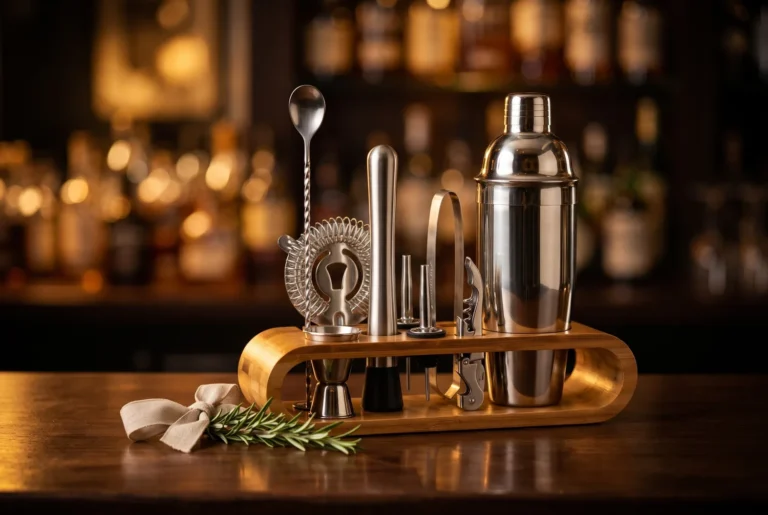
A stainless steel shaker will last for years, provided it is treated properly. Stainless steel shaker care comes down to a few simple habits: rinse straight away, wash gently, dry immediately and store it dry. This guide explains why each one matters, how to adapt your routine to the steel grade (304 or 201), to engravings and to coloured finishes, and how to deal with a limescale mark or a small rust spot. The same rules apply to your jigger, bar spoon, strainers and the rest of your kit.
Why stainless steel still needs a little care
Stainless steel owes its resistance to the chromium it contains: on contact with air, a very thin oxide layer forms on its surface and protects it. That layer renews itself, but some situations put it to the test: lingering moisture, acidic or sugary residues left to dry, chlorine, and iron particles left behind by steel wool or by a tool made of ordinary steel.
Behind a bar, these situations are common. Lemon juice, syrups and liqueurs cling to the sides, meltwater from the ice sits at the bottom of the tin, and tools are often put away while still damp. None of these habits will ruin good stainless steel in one go; it is the repetition that dulls the metal, leaves water marks or causes pitting on the less resistant grades.
304 or 201 stainless steel: what changes for care
Two grades of steel are used for most bar tools. You wash them the same way, but they are not equally forgiving when you skip a step. As we explain in our guide to choosing a cocktail kit, a reliable product page always states which grade is used.
- 304 stainless steel (known as 18/8) is the benchmark food-grade steel. It stands up well to citrus and moisture. It is the material of our engraved 3-piece Boston sets and of our black 8-piece cocktail kit.
- 201 stainless steel contains less nickel. More affordable, it is perfectly suited to home use, but it copes less well with prolonged moisture, so drying straight away becomes the rule. Our polished stainless steel 3-piece Boston shaker set and our stainless steel ice scoops fall into this category, and their product pages say so.
In practice, if you do not know the grade of your tools, care for them as if they were 201: these precautions cost a 304 steel nothing.
What to do after every cocktail
The most effective work happens in the minute after serving. A residue that is still liquid rinses away under the tap; the same residue once dry calls for a sponge and some time.
- Rinse immediately: the shaker, jigger, bar spoon and strainer, under clear water, between two cocktails as well as at the end of the evening. For the coil of a stainless steel spring Hawthorne strainer, hold it under the tap and flex it with a finger to dislodge pulp and bits of mint.
- Wash in lukewarm water with a mild washing-up liquid and the soft side of a sponge. Pay attention to the inside of the tins, where sugar leaves a sticky film, and to the markings inside the jigger.
- Rinse thoroughly so that no trace of detergent is left to mark the surface as it dries.
- Dry straight away with a soft, lint-free cloth, inside as well as out. Water left to evaporate on its own leaves limescale marks, especially where the water is hard.
- Let the tools air for a few minutes, kept apart, before putting them away: the bottom of a tin often holds on to a little moisture.
While you work, a non-slip bar mat placed next to the sink doubles as a drying rack: its raised nubs let the water drain away beneath the rinsed tools, so they are not left sitting in a puddle while they wait for the cloth.
The bartender’s tip
Keep a microfibre cloth set aside for your bar tools and within easy reach. A tea towel that has been used for other jobs can leave lint or greasy smears on polished stainless steel.
What is best avoided
- Steel wool and abrasive scourers: they scratch polished steel, strip coloured coatings and can leave iron particles that later rust on the surface.
- Bleach and chlorine-based cleaners: chlorine attacks the steel’s protective layer and can cause pitting, especially if it is not rinsed off.
- Long soaks: leaving a shaker overnight in soapy water does not help, and it is particularly worth avoiding for 201 steel and for anything with a wooden or bamboo stand.
- Storing tools damp: nesting two tins while they are still wet traps the moisture, which eventually marks the sides.
Engravings and coloured finishes: extra precautions
Engraved tools
An engraving creates small grooves where sugar and citrus residues settle. After rinsing, run a soft toothbrush, kept for this purpose only, along the pattern, then dry by dabbing with the cloth rather than rubbing. Avoid any abrasive sponge, which would wear away the contrast of the design. This is the care we recommend for all our engraved shakers and sets: wash by hand, no abrasives, dry straight away.
Black, gold, copper or rose gold finishes
On these pieces, the colour comes from a coating applied to the steel. It makes no difference to the drink, but it calls for a gentle touch: hand washing only, lukewarm water, a soft sponge and no harsh products. The dishwasher, with its strong detergents and hot cycles, is the most common reason a coating turns dull or starts to flake. Store these pieces so they do not knock against each other, too: a bump against another tin can mark the colour.
What about the dishwasher for everything else? Some polished stainless steel pieces can take it, such as our ice scoops, but hand washing is still recommended for most bar tools, starting with shakers, whose seal depends on undamaged rims. If in doubt, follow the care instructions given on the product page.
Removing marks and small blemishes
- White limescale rings: wipe with a cloth soaked in white vinegar diluted with the same amount of water, then rinse and dry. On a coloured finish, test first on a small area out of sight.
- A dull film or fingerprints: a wash with washing-up liquid followed by a brisk dry with a microfibre cloth is usually enough to bring the shine back to polished steel.
- Small rust spots: on bare stainless steel, a paste of bicarbonate of soda and water, applied with a soft cloth in the direction of the polish, then rinsed and dried thoroughly, generally removes them. They often point to a forgotten drying step or contact with something made of iron.
- A lingering smell (milk, egg, coffee): leave some lukewarm water with a little bicarbonate of soda in the tin for a few minutes, then wash as usual.
If a tin has been dented by a fall, or a shaker sticks more and more often, no amount of cleaning will fix it: the rims no longer fit together properly. Our article on the stuck shaker explains how to open one without forcing it.
Storing your tools so they last
Once dry, your tools belong somewhere well ventilated, away from cooking steam. Store the two tins of a Boston side by side, or loosely nested, never jammed into each other. Kits with a stand keep each tool in its place, which limits knocks; you will find our models in the cocktail kits section, and individual tools among our bar accessories.
For the space itself, from the work station to the shelves, our guide to organising your home bar suggests a practical layout. And to review all the tools worth bringing together, see our guide to equipping your home bar.
Can a stainless steel shaker go in the dishwasher?
We recommend washing shakers by hand: lukewarm water, mild washing-up liquid, then dry straight away. This keeps the metal bright, protects engravings and coloured finishes, and preserves the rims on which the seal depends.
Why does my stainless steel shaker have rust spots?
Most often it was put away damp, cleaned with steel wool or left in contact with something made of ordinary steel. A paste of bicarbonate of soda and water removes small spots from bare stainless steel; drying every time stops them coming back.
How do I remove white marks from a jigger or shaker?
They are limescale deposits left by water as it dries. A cloth soaked in diluted white vinegar dissolves them; then rinse and dry straight away with a microfibre cloth.
Does a gold or black finish need special care?
Yes: hand washing only, with no abrasive sponge or harsh product, then dry immediately. Avoid the dishwasher and knocks between pieces, which dull or mark the coating.
Further reading
Please drink responsibly. Alcohol abuse is dangerous for your health.