“Shake well”: most recipes stop there. Yet how long you shake a cocktail changes its temperature, its dilution and its texture, and therefore its flavour. Too short and the drink stays lukewarm, harsh and over-concentrated; too long and it turns thin and watery. This guide gives you practical benchmarks: the basic timing, what makes it vary (the ice, the shaker, the ingredients) and the signs that tell you it is time to strain. It complements our complete guide to the cocktail shaker.
What happens inside the shaker
Shaking a cocktail does three jobs at once. The first is to chill: the ice gives up its cold to the liquid as it melts, and the movement multiplies the contact between the cubes and the mix. The second is to dilute: the meltwater softens the alcohol and binds the flavours together. A shaken cocktail commonly gains around a quarter of its volume in water, and that water is part of the recipe. The third is to aerate: the impacts against the walls of the tin work in tiny air bubbles that give the drink its lively, slightly frothy texture, especially with citrus juice.
Chilling and dilution go hand in hand: there is no cold without melting. That is why you cannot get a very cold, barely diluted cocktail simply by shaking for longer. After a certain point, the mix approaches the temperature of the ice, and each extra second mostly adds water.
The basic timing: 10 to 15 seconds
For a classic shaken cocktail over standard ice cubes, such as a Daiquiri or a Margarita, most bartenders shake for 10 to 15 seconds, and hard. Measurements published by several bar specialists show that most of the chilling happens within that window: beyond it, the temperature barely drops any further, while dilution slowly carries on.
Energy matters as much as time. A long, full back-and-forth movement that sends the ice from one end of the shaker to the other chills far faster than a small, hesitant one. Ten firm seconds beat thirty limp ones.
The bartender’s tip
Count under your breath the first few times: “one-and-two-and-three…”. You will soon learn to recognise the right moment from the sound of the ice and the cold of the metal in your hands, and you will no longer need to count.
The ice changes everything
The size and condition of your ice change the ideal timing. It is often the most overlooked variable at home, yet it matters as much as the technique. Our guide to ice and garnishes covers the different types of ice in detail.
- Solid, dry cubes straight from the freezer: 12 to 15 seconds. They melt slowly, chill well and dilute in a controlled way.
- Wet or half-melted cubes: cut down to 8 to 10 seconds. They bring water from the start and dilute faster.
- Hollow or small machine ice: 6 to 8 seconds is often enough. Their large surface area melts quickly.
- Crushed ice: just a few seconds, or a quick “whip shake” when the cocktail will be served over crushed ice, as many tiki drinks are.
- A single large cube: some bartenders shake with one big cube to aerate more while diluting less; allow a little longer.
Fill the shaker two-thirds to three-quarters full of ice. With too few cubes, they melt quickly into a liquid that stays warm: the cocktail ends up both warmer and more diluted.
Boston or cobbler: the shaker matters too
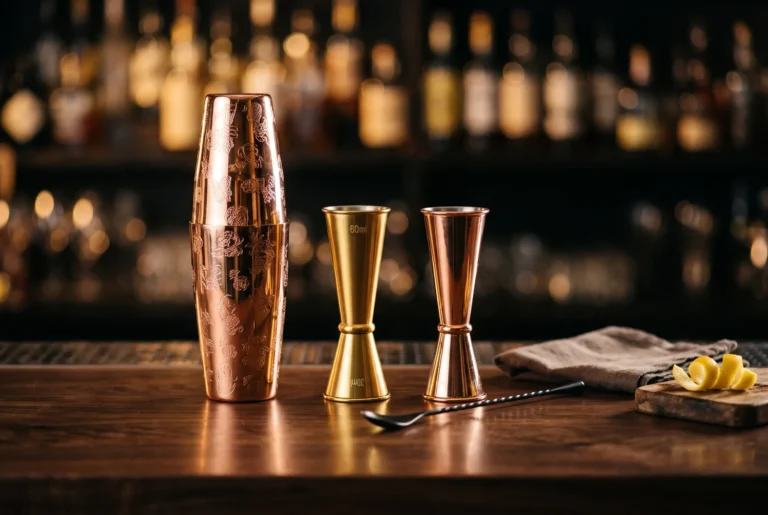
Metal conducts cold far better than glass. An all-stainless-steel Boston, such as the engraved Boston shaker 500 + 800 ml, chills quickly and gives the ice a long path to travel: 10 to 12 seconds already produce a properly cold drink. If your Boston pairs a tin with a glass, allow a few seconds more, because the glass absorbs the cold first. Our guide on how to use a Boston shaker covers sealing it and holding it.
The cobbler is more compact, so the ice travels a shorter distance. A 550 ml stainless steel cobbler shaker generally needs 12 to 15 seconds. Avoid shaking it for much longer: the cold contracts the metal and the cap may stick, as explained in our cobbler shaker how-to. To compare the two families, see also Boston or cobbler: which shaker to choose.
Adjusting the timing to the ingredients
Not every shaken cocktail is treated the same way. A few benchmarks:
- Citrus and syrup (sours, daiquiris, margaritas): 10 to 15 seconds, for a lively texture and real freshness.
- Egg white or aquafaba: a first round without ice to build the foam, then 10 to 15 seconds on ice. Everything is explained in our guide to the dry shake and reverse dry shake.
- Cream, cream of coconut, coffee: shake a little harder and a little longer, up to 15 to 20 seconds, to emulsify the thicker ingredients properly.
- Long drinks (topped with soda water or another mixer): a short 6 to 8 second shake is enough, since the drink will be diluted anyway and served over ice.
- Cocktails served over crushed ice: a few seconds; the ice in the glass will finish the job.
The signs that never lie
Rather than timing yourself, trust your senses. The tin becomes covered with a layer of frost and almost painful to hold: the cocktail is cold. The sound changes: at first the cubes rattle sharply; as they round off and the liquid increases, the noise becomes duller. Finally, taste: a small drop taken on a bar spoon will tell you whether it needs more dilution or whether the alcohol is still too present.
Strain as soon as you stop shaking: the ice keeps melting in the shaker. A stainless steel Hawthorne strainer with spring holds back the cubes, and an extra fine strainer removes ice shards if you are serving in a coupe, following the principle of double straining.
The kit for shaking well
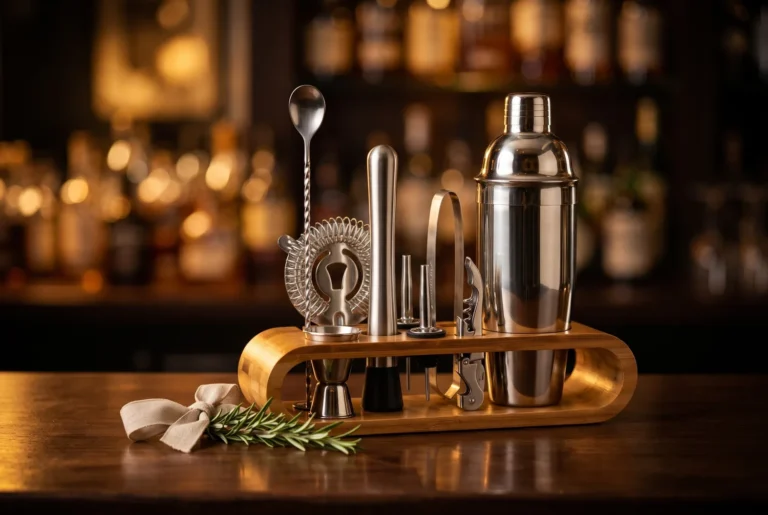
A leak-proof shaker that is comfortable to hold is the foundation: a simple 475 ml stainless steel shaker tin can pair with a glass or another tin to form a Boston. Precise measures, taken with a graduated 30/60 ml Japanese jigger, make your shaking time repeatable from one cocktail to the next: if the volumes change, the dilution changes too. You will find every model in our Boston shakers and cobbler shakers ranges.
How long should you shake a cocktail?
For most cocktails shaken with standard ice cubes, 10 to 15 seconds of vigorous shaking is enough. Shorten it with wet or crushed ice, and lengthen it slightly for thick ingredients such as cream.
What happens if you shake for too long?
The cocktail gets barely any colder, but it keeps diluting: it loses flavour and texture. With a cobbler, the cap may also get stuck.
Why is my cocktail lukewarm even after shaking?
Usually there was not enough ice, the cubes were already melting, or the shake lacked energy. Fill the shaker two-thirds full of dry cubes and shake firmly.
Is the timing the same for an alcohol-free cocktail?
Yes, the benchmarks are the same: the ice chills and dilutes in exactly the same way. A citrus-based mocktail is shaken for 10 to 15 seconds.
Further reading
Please drink responsibly. Alcohol abuse is dangerous for your health.