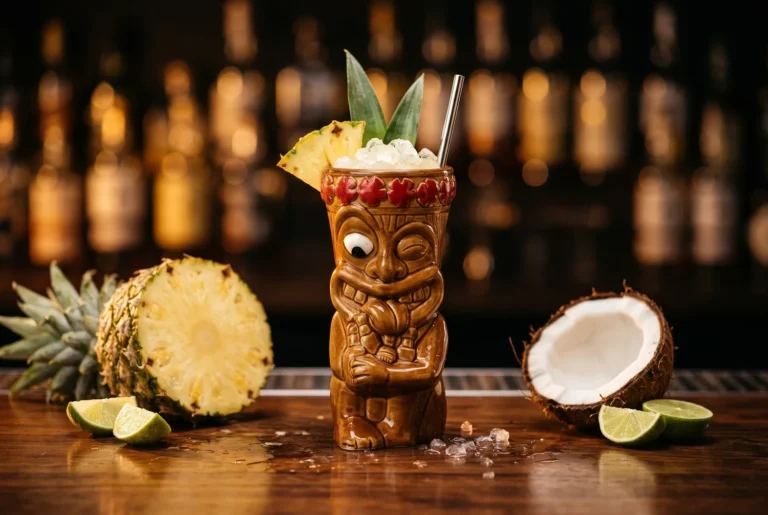
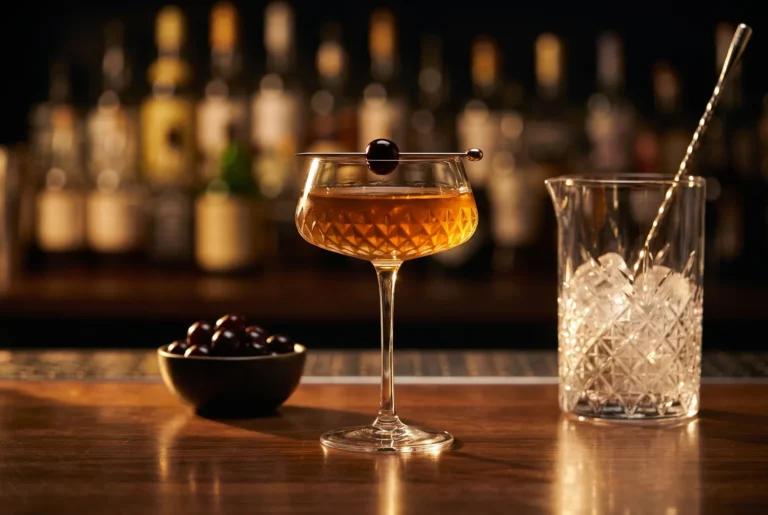
A cocktail is not finished when the shaker falls silent. The ice that keeps it cold in the glass and the cocktail garnish that crowns it are part of the recipe: they change the temperature, the dilution, the aroma that reaches your nose before the first sip, and the way the drink is perceived. A lemon twist expressed over a Dry Martini changes its first impression; a large ice cube in an Old Fashioned keeps it cold without drowning it. This guide covers the whole finishing stage: the types of ice and their uses, citrus twists, herbs and flowers, garnishing tools and hygiene, followed by the articles that explore each subject in depth.
Ice, the first ingredient of a cocktail
Ice works twice in a cocktail: during preparation, in the shaker or the mixing glass, and then in the serving glass when the recipe is drunk over ice. In both cases it chills and dilutes. That meltwater is not a flaw: it softens the alcohol and binds the flavours together. The bartender’s job is to control it, and the choice of ice is the first lever.
Shapes of ice and their uses
- Ice cubes (around 3 cm): the all-purpose ice. They are used for shaking, for stirring and for serving long drinks. They should be hard and dry, taken out of the freezer at the last moment.
- The large cube or sphere: a single block of 5 cm or more, placed in a short glass. Its small surface compared with its volume makes it melt slowly: this is the ice for sipping cocktails such as the Old Fashioned or the Negroni.
- Crushed ice: small fragments that chill very quickly and melt quickly. It suits cocktails served on a mound of ice, such as juleps, cobblers and tiki drinks, where dilution is part of the balance.
- Cracked ice: roughly broken cubes, halfway between the two, used for drinks built with a muddler such as the Caipirinha.
A simple rule: the finer the ice, the faster the dilution. For a shaken cocktail, good hard cubes give a more consistent result than wet or half-melted ice. For a stirred cocktail, the same ice gives a gradual chill that you control with the spoon, as explained in our guide to stirred cocktails.
Ice quality
Ice cubes from a domestic freezer are often cloudy: air and minerals dissolved in the water gather in the centre as it freezes. They melt slightly faster and can pick up freezer smells. A few precautions make a clear difference: use water low in minerals, keep the ice in a closed container and renew your stock regularly. Clear ice, made by directional freezing in an insulated cool box, can then be cut into neat cubes; this technique will have its own article in this guide.
Citrus twists: aroma before the first sip
Citrus peel contains highly aromatic essential oils. Expressing a twist over a glass sprays a thin film of these oils onto the surface of the drink: it is the first thing you smell as you raise the glass. Lemon peel goes with dry, lively cocktails, orange peel with amber and bitter ones based on whisky or vermouth.
- Wash and dry the fruit, then take off a strip of peel with a vegetable peeler, removing as little of the bitter white pith as possible.
- Hold the peel between thumb and forefinger, skin side facing the glass, a few centimetres above the surface.
- Fold it sharply to release the oils, then run the skin around the rim of the glass.
- Drop it into the glass or rest it on the rim, depending on the recipe, or discard it if you only want the aroma.
We speak of a twist when the peel is rolled or curled for presentation. Decorative shapes, long spirals and the flamed twist take a little practice: they will be covered in the article of this guide dedicated to citrus zests and twists.
The bartender’s tip
Cut your twists when you serve, never in advance: the oils evaporate and the peel dries out within a few dozen minutes. A whole citrus fruit keeps far longer than a garnish that has already been cut.
Herbs, fruit and flowers: garnish without clutter
A successful garnish announces the flavour of the drink. A sprig of mint on a julep or a Mojito perfumes every sip, because your nose passes over the leaves as you drink. A lime wheel signals the acidity of a Margarita; a maraschino cherry traditionally accompanies the Manhattan.
- Herbs (mint, basil, rosemary, thyme): choose fresh, firm sprigs. Slap the mint lightly in the palm of your hand before placing it: the shock releases its aromas without bruising it.
- Fruit: citrus wedges, wheels or half-wheels, cherries, olives for Martinis, cucumber slices. Cut them cleanly, without visible pips, and place them on the rim or on a cocktail pick.
- Edible flowers: pansy, borage, nasturtium or violet, bought from a food supplier. A decorative flower from a florist may have been treated: it has no place in a glass.
The garnish should relate to what is in the glass. A decoration unconnected with the ingredients muddles the message and gets in the drinker’s way. One well-chosen element is better than a pile of fruit, umbrellas and straws. Tiki cocktails are the exception: their generous presentation, with fruit, leaves and carved mugs, is part of their tradition, as the Zombie recipe shows.
Garnishing tools
A few tools are enough to garnish cleanly and quickly. The first is a pair of garnish tweezers: long, slim stainless steel tongs that let you pick up a leaf, a twist or an ice cube without touching it, and place it exactly where it belongs. A pair of 20 cm stainless steel garnish tweezers suits most glasses; 30 cm garnish tweezers reach the bottom of tall glasses and tiki mugs. Techniques and tweezer lengths will be covered in a dedicated article.
- A vegetable peeler or paring knife for cutting twists.
- A chopping board kept for fruit, to avoid garlic or onion smells.
- A twisted bar spoon to stir a drink served over crushed ice and lift the garnish.
- A fine strainer, such as a fine-mesh strainer, to catch ice shards and bits of herbs: this is double straining.
- Non-slip bar mats to rest glasses on while garnishing and catch the drips.
You will find these small tools in our bar accessories section, alongside the preparation equipment.
Hygiene and organising your station
The garnish is the only part of the cocktail that is often handled, and it ends up in the glass. A few professional bar habits apply at home too:
- Wash citrus fruit and herbs before cutting or placing them.
- Handle ice and garnishes with tweezers or a scoop, never with a glass dipped into the ice bucket: a chip of glass would be invisible in it.
- Keep prepared garnishes cold and covered, and throw away whatever has not been used at the end of the evening.
- Prepare everything before you start: chilled glasses, twists within reach, ice ready. A cocktail does not wait well while you look for a lemon.
Sugar, the other finishing touch
Sugar syrup is not a garnish, but it belongs with the homemade preparations that complete ice and twists. A simple syrup, a rich syrup or a demerara syrup changes the texture and roundness of a cocktail. Making it yourself lets you control its strength and avoid added flavourings. Ratios, honey variations and storage will be presented in an article of this guide, with links to the recipes that use them.
These techniques also apply to alcohol-free drinks: a homemade lemonade served over a large clear ice cube, with an expressed twist and a sprig of mint, gains as much in presentation as a cocktail. The choice of glass matters too: our guide which glass for which cocktail helps you match each recipe with its shape.
Which ice should I use to shake a cocktail?
Hard, very cold ice cubes, taken out of the freezer at the last moment. Crushed ice melts too quickly in a shaker and dilutes the drink less predictably.
Should the twist go into the glass?
It depends on the recipe. The peel can be expressed and dropped into the glass, rested on the rim, or simply expressed and discarded if you want the aroma without the bitterness of peel steeping in the drink.
How do I keep mint fresh for garnishing?
Stand the sprigs, stems down, in a glass of cold water like a bouquet, and take them out when serving. Slap them lightly in your palm before placing them to release their aromas.
What are garnish tweezers for?
They let you pick up and place a herb, a twist, a piece of fruit or an ice cube precisely without touching it with your fingers. It is cleaner and more accurate, especially in tall glasses.
The articles in this guide
No articles yet.
Please drink responsibly. Alcohol abuse is dangerous for your health.