A good cocktail is neither too sharp, nor too sweet, nor overwhelmed by the alcohol: it all comes down to cocktail balance. For a whole family of drinks, the sours, bartenders rely on a simple formula that is easy to remember, the 2-1-1 rule: two parts base spirit, one part sour, one part sweet. This article explains where the rule comes from, how to apply it with a jigger and, above all, how to adjust it to your ingredients and your taste, because a formula is only ever a starting point.
The 2-1-1 rule: strong, sour, sweet
The principle is a ratio, not a fixed measure. Each “part” is the same unit of measurement, whatever it may be: 20 ml, 25 ml or 30 ml. That way you get a cocktail with the same structure, whether you make a small or a large quantity.
- 2 parts strong: the base spirit (gin, whisky, rum, tequila, cognac…), which gives the drink its character.
- 1 part sour: usually freshly squeezed lemon or lime juice, which brings freshness and tension.
- 1 part sweet: sugar syrup, honey syrup, agave syrup or a liqueur, which rounds off the acidity.
With a 25 ml part, the rule gives 50 ml of spirit, 25 ml of lemon juice and 25 ml of syrup: the base of a whisky sour, a daiquiri or a fresh-lime gimlet. The idea is not new: English and Caribbean punch recipes were already passed on through a rhyme, “one of sour, two of sweet, three of strong, four of weak”. The modern sour is a shorter, more concentrated version of it.
Why this ratio works
Acidity and sugar answer each other: sugar softens the sensation of acid, and acid stops the sugar from feeling heavy. Volume for volume, freshly squeezed lemon juice and a simple sugar syrup (one volume of sugar to one of water) roughly cancel each other out, hence the equal parts. The spirit, twice as present, keeps centre stage without being harsh, because the ice in the shaker will then lengthen the mix.
Dilution is part of the balance too. When you shake over ice, some of the ice melts into the drink: it softens the alcohol, ties the flavours together and chills everything. The same recipe can taste too strong if it is shaken too little, or flat if it is shaken for too long. For the right shaking time, see our article on how long to shake a cocktail.
Measuring precisely: the role of the jigger
A ratio is useless if the measures vary from one glass to the next. A few extra millilitres of lemon juice are enough to make a sour aggressive. That is the whole point of measuring each ingredient, as explained in our complete guide to the jigger.
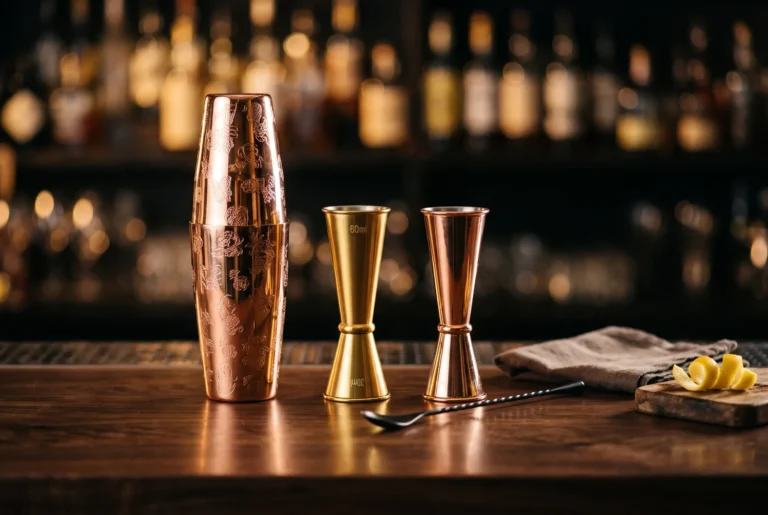
For the 2-1-1 rule, a double-ended jigger is the ideal tool: the large side for the spirit, the small side for the sour and the sweet. A matte black 20/40 ml jigger gives you 40 ml, 20 ml and 20 ml directly; a graduated 2-in-1 30/60 ml jigger also lets you read the in-between measures thanks to its inner markings. If you follow American recipes in ounces, keep our table for converting oz to ml close at hand, along with our method for using a jigger without spilling.
The bartender’s tip
Always pour in this order: syrup and lemon juice first, spirit last. If you get a measure wrong, you only lose inexpensive ingredients, and you can taste the sweet-and-sour base before adding the spirit.
Adjusting the formula to your ingredients
The 2-1-1 rule assumes “standard” ingredients. As soon as they change, the measures need correcting to get the balance back.
The sweet
- Rich syrup (two volumes of sugar to one of water): it is sweeter, so reduce the sweet part by about a third.
- Honey or agave: too thick to mix when cold, they are first loosened with a little hot water; their pronounced flavour sometimes calls for a slightly smaller measure.
- A liqueur instead of syrup: in a Sidecar or a Margarita, orange liqueur sweetens and flavours at the same time. It is less sweet than a syrup and contains alcohol, so you often use a little more of it, and a little less base spirit.
The sour
- Lemon or lime: both work with the rule; lime gives a livelier, more aromatic acidity.
- Freshly squeezed juice: bottled juice, often flatter or more bitter, throws the drink off balance; squeeze just before serving.
- A gentler fruit (orange, grapefruit, pineapple): less acidic, it cannot replace lemon in equal parts; combine it with a little lemon.
The strong
A spirit with a very pronounced flavour or high strength can take a touch more sugar; a lighter spirit is sometimes happy with 1.5 parts of sour and sweet instead of 2. Many bars today work with a slightly drier ratio, close to 2 – ¾ – ¾ (for example 60 ml of spirit, 22.5 ml of lemon, 22.5 ml of syrup): it is the same logic, with less sour and less sweet.
Taste and correct before serving
Bartenders taste every cocktail before serving it, with a straw or a spoon, never straight from the tin. If the mix stings or makes your mouth pucker, the sour dominates: add a few millilitres of syrup. If it is flabby or cloying, the sweet dominates: add a dash of lemon. If it burns, it lacks dilution: shake for a few more seconds. Write down your adjustments, and the same recipe will give the same result every time.
To measure smaller quantities, such as half a centilitre of syrup to correct a drink, a set of 2 Japanese jiggers, 30/60 and 30/45 ml offers fine markings and two cup sizes. You will find every model in our jiggers range, and can choose yours with our comparison of the Japanese versus classic jigger.
Cocktails that follow the 2-1-1 rule
Once the formula is in your head, you will recognise its structure in many classics. The whisky sour (bourbon, lemon, sugar, often an egg white for the foam), the daiquiri (white rum, lime, sugar), the fresh-lime gimlet, the gin sour, the pisco sour: all rest on a base spirit, a sour and a sweet. Modern variations swap the syrup for a liqueur, a flavoured syrup or a bitter aperitif, without changing the principle.
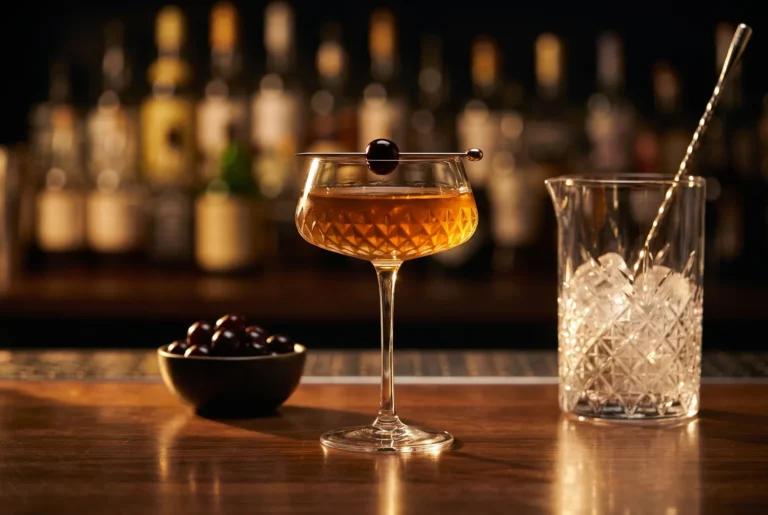
The rule also works without alcohol: replace the two parts of strong with a cold-brewed tea, a flavoured water or an alcohol-free spirit, keep the sour and the sweet, and shake over ice with an engraved Boston shaker with a foliage pattern. Serve in a chilled engraved cocktail coupe: you get a light, balanced sour that everyone can share.
What does the 2-1-1 rule mean in cocktails?
It is a ratio: two parts base spirit, one part sour (lemon juice) and one part sweet (syrup). It is the starting point for cocktails in the sour family.
How much is one “part”?
Whatever you like, as long as the unit is the same for every ingredient. With a 25 ml part, you get 50 ml of spirit, 25 ml of lemon and 25 ml of syrup, which makes one drink.
My sour is too sharp, what should I do?
Add a little syrup, a few millilitres at a time, and taste. Check your syrup too: a thin syrup or a very acidic lemon juice will shift the balance.
Does the rule work with a liqueur?
Yes, but a liqueur is less sweet than a syrup and contains alcohol: increase its measure slightly and reduce the base spirit a little.
Further reading
Please drink responsibly. Alcohol abuse is dangerous for your health.