A non-alcoholic cocktail is not just a mix of juices poured into a tall glass. Done well, it is built exactly like a bar classic: a base that brings flavour, acidity to wake it up, sweetness to round it off, sometimes a touch of bitterness to lengthen the finish, all of it chilled and diluted just enough. This guide explains what makes a good mocktail, how to make up for the missing alcohol, which main families of drinks to explore and which tools to use: the very same ones as for any cocktail.
What alcohol brings, and how to replace it
In a classic cocktail, alcohol does more than make it a cocktail. It carries aromas, adds body and a sense of warmth, and its slight bitterness balances the sugar. Take it away and the drink often tastes thinner and sweeter than it really is. The whole art of alcohol-free mixing lies in rebuilding that structure by other means.
- Acidity: freshly squeezed lemon, lime or grapefruit adds lift and keeps the drink from tasting flat.
- Bitterness: tonic water, grapefruit zest, tea brewed a little longer or a syrup of bitter herbs lengthen the finish, as a spirit would.
- Heat: fresh ginger or a punchy ginger beer gives a warming sensation reminiscent of alcohol.
- Texture: a shaken egg white, a little aquafaba (the cooking liquid from chickpeas) or pineapple juice emulsified in the shaker add body and a silky foam.
- A pinch of salt, or a few drops of saline solution, sharpens citrus flavours without being noticed.
One article in this guide will be devoted to balancing a mocktail, with starting ratios and the most common mistakes. In the meantime, the principles of our article on the 2-1-1 rule work very well: simply replace the spirit base with a juice, an infusion or a non-alcoholic spirit, then adjust the acidity and sugar as you taste.
Balance and dilution: the same rules as at the bar
The most common flaw in a non-alcoholic cocktail is too much sugar. Fruit juices are already sweet, and so are syrups: add pineapple juice, orange juice and grenadine together and you quickly end up with a heavy drink. Start with a small amount of syrup (10 ml), taste, then add more if needed. A dash of lemon juice almost always rescues a mix that is too sweet.
Dilution matters just as much as in a classic cocktail. Shaking with ice chills the drink and lengthens it with meltwater, which softens the edges and binds the ingredients. The timings in our article how long to shake a cocktail still apply: 10 to 15 seconds for a sour, a little less for a recipe already long on juice. A mocktail topped with soda, on the other hand, is built straight in the glass over plenty of ice to keep the bubbles.
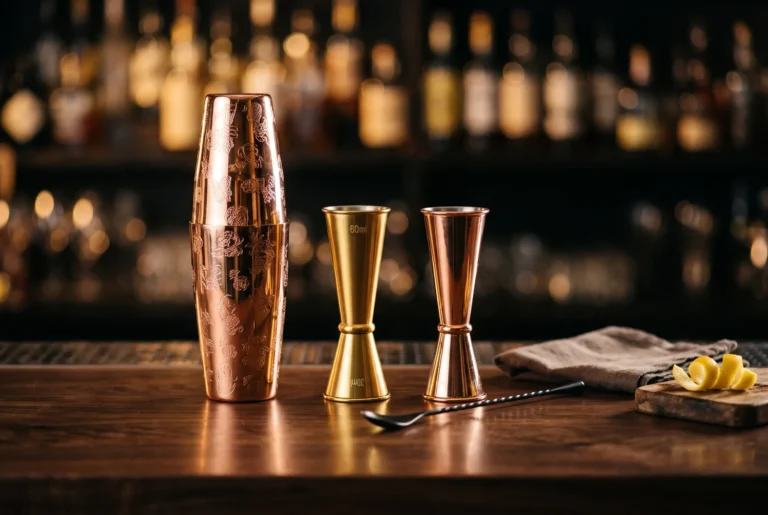
Measuring accurately is the best way to repeat a recipe you enjoyed. A graduated 30/60 ml Japanese jigger lets you measure to the nearest 5 ml, which makes all the difference with lemon juice or syrup. For small amounts, the matte black 20/40 ml jigger is handier. Our jiggers range covers every size.
The bartender’s tip
Always taste before serving, using a straw or a bar spoon dipped into the mix. Without alcohol, the balance comes down to a few millilitres: half a measure more or less of syrup or lemon changes everything.
The main families of non-alcoholic cocktails
Like classic cocktails, mocktails fall into a few main families. Knowing them lets you improvise with whatever you have to hand.
Alcohol-free sours
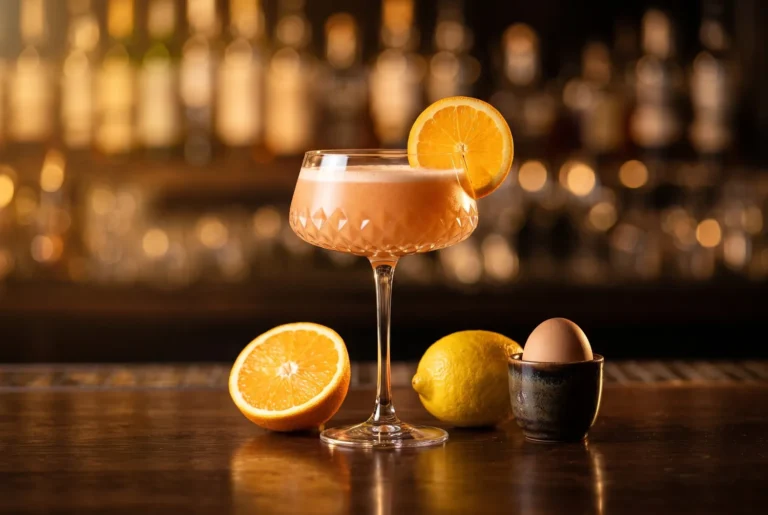
A juice, a citrus, a syrup and often an egg white for foam: the sour template works perfectly without alcohol. A base of black tea or freshly pressed apple juice stands in for the spirit, while the lemon and syrup do the rest. These drinks are shaken hard and served in a coupe or a short glass. For the foam, the technique is explained in our article on the dry shake and reverse dry shake.
Highballs and fizzes
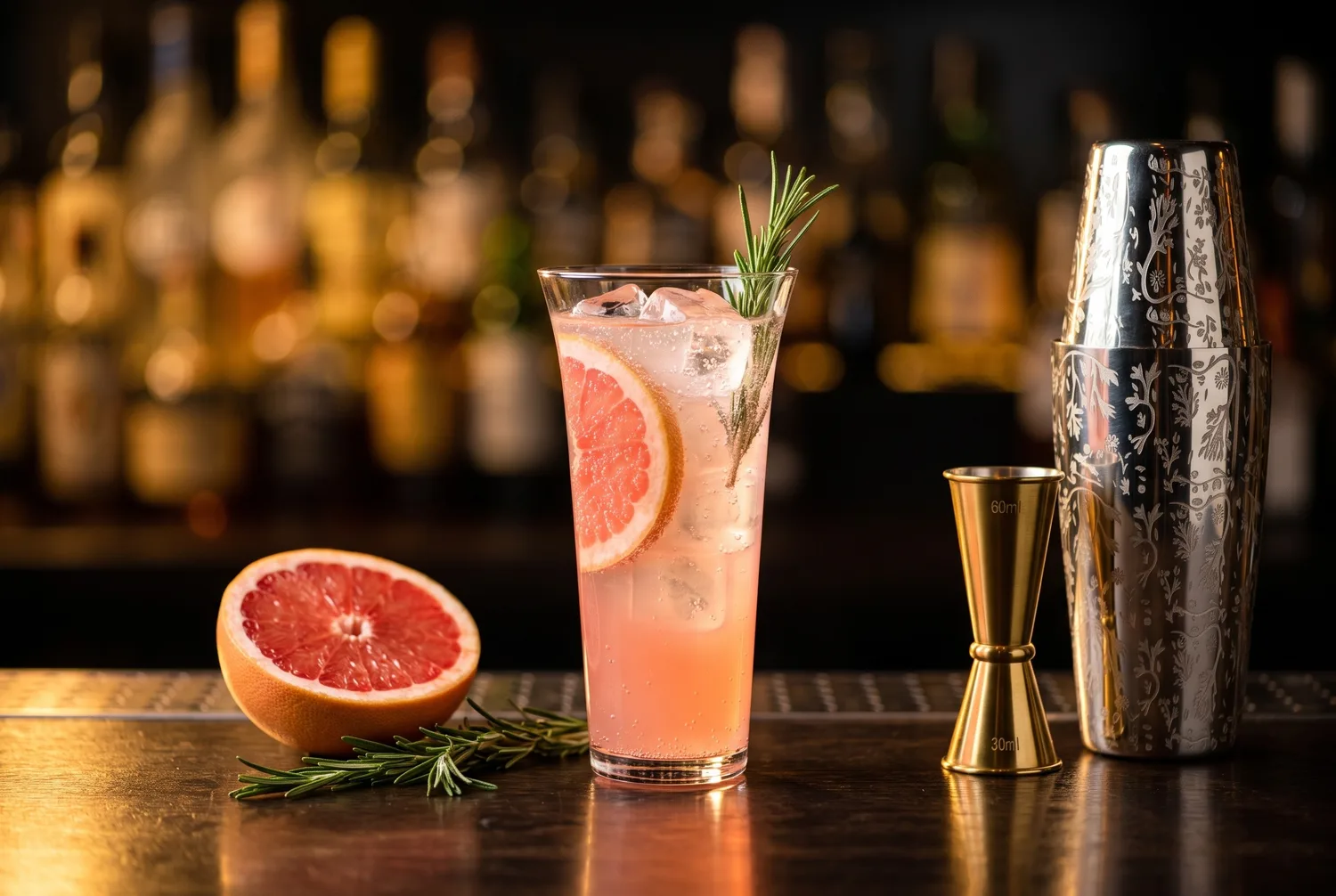
This is the simplest family: an aromatic base (citrus, syrup, herbs) topped with soda water, tonic or ginger beer and served over ice in a tall glass. Many classics have an alcohol-free counterpart: a Moscow Mule without vodka becomes a very refreshing mix of lime and ginger beer, and the Mojito keeps all its character with mint, lime and cane sugar. Choosing your mixer will be the subject of an article in this guide: tonic, ginger beer and ginger ale differ in both bitterness and fizz.
Tiki and fruity drinks
Pineapple, passion fruit, orgeat, spices: the tiki world lends itself naturally to alcohol-free drinks, as its recipes already rely on very aromatic juices and syrups. Served over crushed ice in a bamboo tiki mug or an embossed tiki glass with a generous garnish, they look every bit as spectacular as the originals.
Zero-proof spritzes and aperitifs
Non-alcoholic bitter aperitifs, topped with soda water and served over ice with a slice of orange, follow the spritz idea. Bitterness plays the lead role here: it is what gives the drink its grown-up character and stops it being just another soft drink.
Non-alcoholic spirits and mixers
A new category of drinks has grown in recent years: non-alcoholic spirits. Most are distillates or macerations of plants, spices and citrus, usually between 0.0 and 0.5% ABV (check the label). They bring notes of juniper, spice or wood, but not the texture or warmth of alcohol: they dilute faster and often need a little less ice or a shorter shake. Once opened, many keep for less time than a regular spirit and belong in the fridge. An article in this guide will explain how to use them in cocktails.
Mixers, meanwhile, make up half the glass in a highball. Choose them low in sugar and well carbonated, and serve them very cold: a warm bottle loses its bubbles as soon as it hits the ice. Open them at the last moment and pour them down a bar spoon to keep the fizz.
The tools: exactly the same as for any cocktail
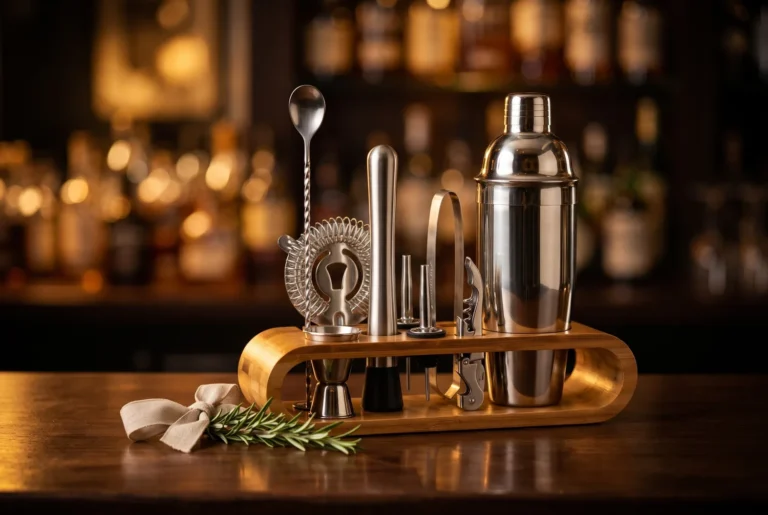
Nothing sets the tools of an alcohol-free bar apart from those of a classic one. A shaker emulsifies juices, egg white or aquafaba and chills the drink quickly; an engraved Boston shaker with a foliage pattern or any model from our Boston shakers range does the job perfectly. A spring Hawthorne strainer holds back the ice, and a fine strainer catches citrus pulp and pips: double straining is especially useful with fresh juice.
For recipes with muddled mint or fruit, a muddler comes with the 4-piece Boston shaker set with muddler. And if you are starting from scratch, our guide to setting up a home bar lists the tools in order of priority.
Glass, ice and garnish
A non-alcoholic cocktail deserves the same care in presentation as any other. In your guests’ eyes, it is even what separates a juice from a real cocktail. Serve sours in a coupe, such as the 300 ml engraved cocktail coupe, highballs in light highball glasses filled with ice, and tiki drinks in a mug. Our guide which glass for which cocktail helps you choose, and our cocktail glasses range shows our models.
Use plenty of very cold ice: the more there is in the glass, the more slowly it melts. As for the garnish, it announces the aromas in the glass: a citrus zest expressed over the drink, a sprig of rosemary, a mint leaf slapped in your palm, a slice of fruit. All the techniques are gathered in our article on ice and garnishes.
Offering non-alcoholic cocktails to your guests
At a party, having one or two alcohol-free recipes as carefully made as the others means everyone finds a drink they like, without having to explain themselves. Prepare the bases in advance (pressed juices, syrups, cooled infusions) and keep them chilled in bottles: all that is left is to shake or top up when serving. An article in this guide will cover the alcohol-free bar at parties; for quantities, our method for working out how many bottles you need for a cocktail party applies to juices and mixers too.
What is the difference between a mocktail and a non-alcoholic cocktail?
None: “mocktail” blends “mock” (imitation) and “cocktail”. It describes a drink built like a cocktail, but without alcohol.
Do you need special tools to make non-alcoholic cocktails?
No. Shaker, jigger, strainers, bar spoon and glasses are the same as for any cocktail. The shaker is actually very useful for emulsifying juices and giving a richer texture.
Why is my non-alcoholic cocktail too sweet?
Fruit juices and syrups add up quickly. Cut back the syrup, add a little lemon juice or a bitter mixer such as tonic, and taste before serving.
Can you prepare non-alcoholic cocktails in advance?
Yes, the bases: juices pressed the same day, syrups and infusions keep in the fridge. Add the ice and fizzy drinks only when serving.
The articles in this guide
No articles yet.
Please drink responsibly. Alcohol abuse is dangerous for your health.